Everyday
Alcohol, caffeine, and “is this fine?”
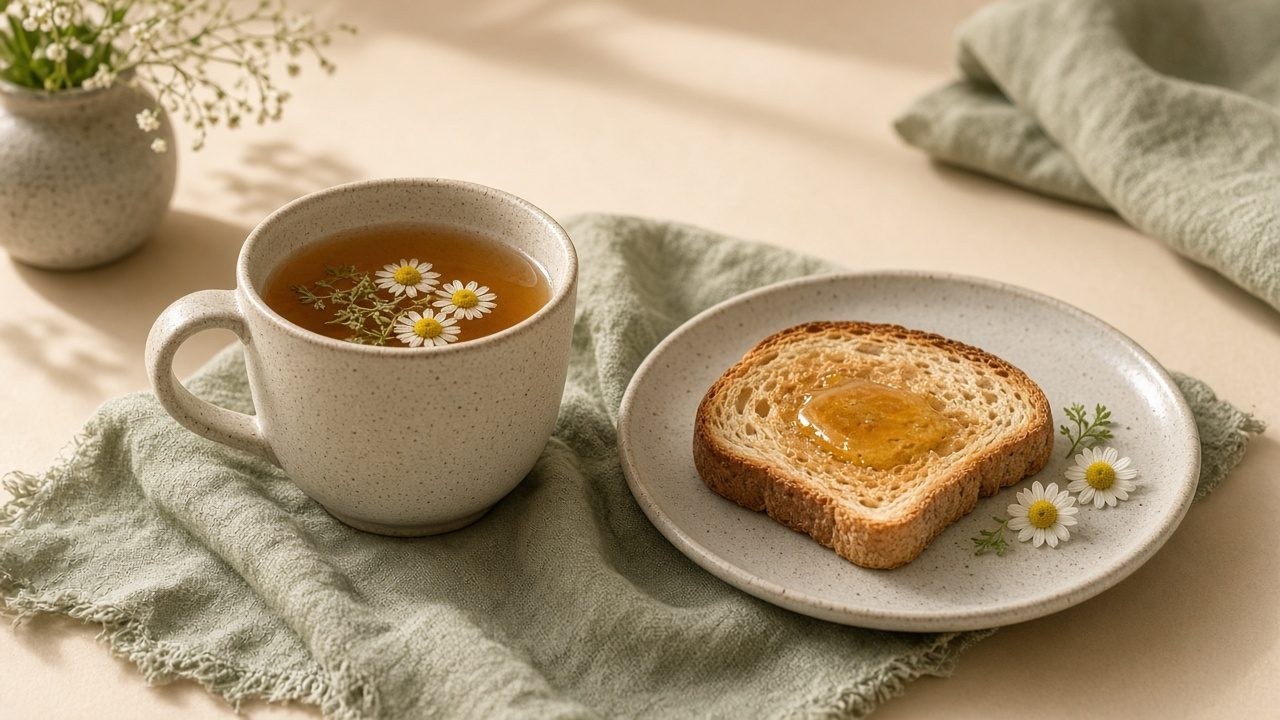
If you’ve been quietly wondering whether your coffee habit or the glass of wine with dinner is “allowed,” it’s a fair question, and you don’t need to feel guilty for asking it.
Most people are not asking for a protocol. They are asking whether the glass with dinner, the second coffee at 2 p.m., or the weekend that includes both is allowed to be ordinary. The internet answers with either a green light dressed up as wellness or a moral lecture. Neither is very useful on a Wednesday.
Coffee is not a meal, and it is not a character flaw.
This page is general education from our registered dietitian team. It does not assign a safe number of drinks, a caffeine milligram cap, or medical nutrition therapy. Pregnancy, medications, liver disease, reflux, anxiety, sleep disorders, and a history of alcohol problems change the conversation. If a line here conflicts with the clinician who knows you, follow them.
What “fine” is actually asking
“Is this fine?” usually means one of three things: Will this wreck the day I’m trying to steady? Is this a health product in disguise? Am I supposed to feel guilty? The educational answers are boring. A drink is not a vitamin. Coffee is not a meal, and it is also not a character flaw. The week matters more than the single cup.
A useful check is what the drink is doing in the day. Coffee with breakfast is different from coffee instead of breakfast. A beer with a satisfying plate is different from drinks as the meal, then 11 p.m. hunger. If the pattern is “I already had one, so the day is ruined,” the story is the problem. The eating out guide is that spiral at a restaurant. The next meal can still be normal.
Alcohol, without a plan we invent for you
Alcohol is not required for a social life, and it is not a health food. “A glass of red wine for the heart” is a slogan that outran the evidence. If you enjoy a drink, it can sit inside a week that still has protein, plants, and sleep. If you do not drink, you are not missing a nutrition step.
- It adds energy that is easy to forget. Drinks rarely feel like food, and they often arrive beside extra food. That is not a moral event. It is why “I barely ate” and a night out can still be a large evening.
- It loosens the next decision. That can be pleasant. It can also be how a planned dinner becomes grazing you did not want. Food already on the table, before you are several drinks in, is the calmer default.
- Sleep often pays for it. Even a moderate evening can fragment sleep. Short sleep makes appetite louder the next day. That loop is biology, not proof you have no discipline. The sleep, stress, and appetite guide is the next morning’s frame: eat, don’t punish.
- Water nearby is practical, not a cleanse. Alternate if you like. You do not have to earn the drink with a gallon. Fluids in ordinary life are in hydration myths.
We will not copy a public-health ceiling onto you and call it your limit. Some agencies describe lower intake as lower risk, and they do not describe alcohol as something to start for health. “Less is fine, none is fine” is the educational stance here. A personal number, if you need one because of a condition or a medicine, belongs to your clinician.
What usually backfires is the reset: skipping breakfast, a punishing workout, or “I’ll be perfect today” after a night that included drinks. A protein-aware first meal and a normal lunch do more than a penance. Weekend anchors are built for that Monday feeling.
Caffeine, without a second job
Coffee and tea count as fluid for most people. A moderate caffeine habit does not “cancel” the water in the cup, and you do not need a special water to make the coffee legitimate. That myth is covered in hydration myths. The more interesting question is whether caffeine is propping up a day that never quite got a meal or a night of sleep.
- Put food somewhere near the coffee. Caffeine can blunt appetite for a bit and then hand you a shaky, hungry afternoon. If the first meal is late, make it a real one. First-meal protein still applies if that meal is at 10:30.
- Afternoon cups are a sleep decision. Caffeine hangs around longer than the buzz. If bedtime is already fragile, the 4 p.m. coffee is a fair experiment to move earlier—not a moral test, and not something alkaline water fixes.
- Energy drinks are not breakfast. They are a concentrated caffeine product, often with a lot of marketing and sometimes a lot of sugar. They are a poor stand-in for food, and they are a worse idea for teens. The life stages guide says the same thing in the teen section.
- Reflux, jitters, and a racing mind are information. If coffee clearly makes heartburn or anxiety louder, you are allowed to drink less without adopting a detox. Timing ideas for reflux, not a treatment, are in reflux and food timing.
In pregnancy, caffeine is a prenatal conversation, not a number to copy from a blog. After birth, if you are feeding a baby, caffeine and alcohol questions belong with your own clinician or a lactation professional—not a webpage assigning a clock. The postpartum eating guide stays on recovery meals for that reason.
When “fine” is the wrong frame
Ask a clinician, not a guide, if you are pregnant or trying to be, if a medicine interacts with alcohol, if you have liver disease, pancreatitis, a history of alcohol use disorder, or if cutting back feels harder than you want it to be. Chest pain, vomiting blood, confusion, or an inability to stop are medical problems, not a cue to try a dry challenge from the internet.
Using alcohol or a very high caffeine intake to manage panic, sleep, or appetite is also a clinician conversation. So is a pattern of restrict-then-drink that feels like the old diet rules in a new outfit. The stress eating guide is the kinder food frame. It is not a treatment for alcohol problems.
We will not give you a taper schedule, a “safe” drink formula, or a list of approved mixers. If the rule has to be that detailed to feel allowed, it is heavier than this practice teaches.
A short “good enough” check
- If I drank, there was food in the evening—not only liquid and a late raid.
- The next meal was a normal meal, not a punishment.
- Coffee sat next to a life that also includes food and sleep, not instead of them.
- I did not treat wine, a mushroom coffee, or an energy drink as a health plan.
- I did not copy a milligram or drink limit off a blog onto a pregnancy, a medicine, or a teen.
- If stopping is the part that feels hard, I know that is a clinician conversation, not a willpower page.
If you can tick most of those, the drink was ordinary. It will not guarantee sleep, a mood, or a weight outcome. It will stop a normal coffee—or a normal glass—from becoming a referendum on the week.
Related pieces: eating out, hydration myths, and sleep, stress, and appetite. The newsletter is a short note—not a reboot.
Sources
- CDC. About Sleep. https://www.cdc.gov/sleep/about/index.html
- Centers for Disease Control and Prevention (CDC). About Moderate Alcohol Use. https://www.cdc.gov/alcohol/about-alcohol-use/moderate-alcohol-use.html
- FDA. Spilling the Beans: How Much Caffeine Is Too Much? https://www.fda.gov/consumers/consumer-updates/spilling-beans-how-much-caffeine-too-much
- U.S. Department of Agriculture & U.S. Department of Health and Human Services. Dietary Guidelines for Americans, 2025–2030 (January 2026). https://cdn.realfood.gov/DGA.pdf
You don’t have to figure out alcohol or caffeine alone. If something here raised a question, reach out to our RD team, or join the newsletter for more support like this.