Life stages
Bone health: calcium, vitamin D, protein, and movement
If a bone density result or a family history has you thinking about your bones for the first time, it’s normal to feel unsure where food fits in.
Bone is living tissue that is built and remodeled throughout life. Most bone mass is built in childhood and adolescence; later, the goal shifts to keeping what you have. Osteoporosis—bones that become weak and more likely to break—affects women and men, and much of the prevention is everyday food and movement.
Food first for calcium, attention to vitamin D, enough protein, and bones that get used.
Calcium: how much
The NIH Office of Dietary Supplements (ODS) lists recommended daily amounts of 1,000 mg for adults 19–50 and men 51–70, and 1,200 mg for women 51 and older and everyone 71 and older. Teens 14–18 need 1,300 mg. More is not better: there are upper limits, and they include calcium from food, drinks, and supplements combined.
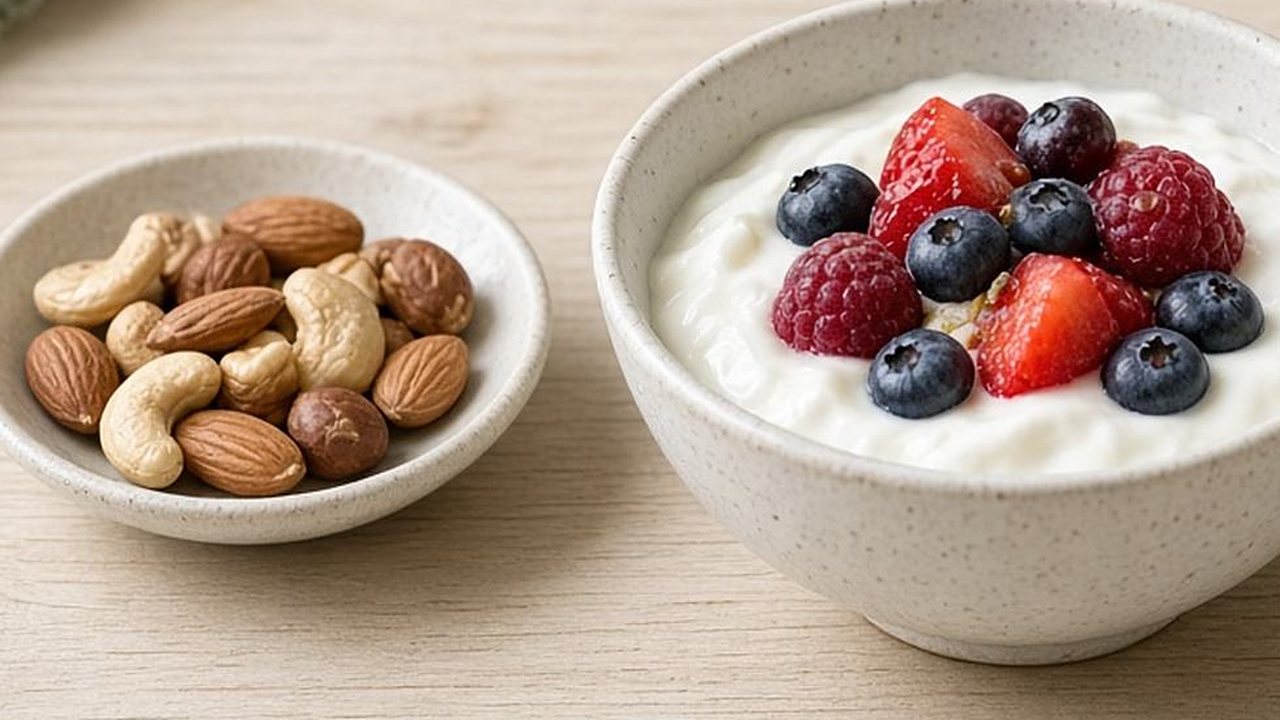
- Dairy foods: milk, yogurt, and cheese.
- Fortified foods: many plant milks, some juices, tofu made with calcium, and some cereals—check labels.
- Other sources: canned fish with soft bones (sardines, salmon), and some leafy greens such as kale and bok choy.
Vitamin D: how much
ODS lists 600 IU (15 mcg) a day for people 1–70 and 800 IU (20 mcg) for adults 71 and older. Very few foods naturally contain vitamin D; fatty fish and fortified milk, plant milks, and cereals are the main food sources. Sun exposure contributes, but it varies with season, location, skin tone, and sunscreen use. Whether you need a supplement is a good question for your clinician—a blood test is sometimes used to decide.
Protein and the rest of the plate
NIAMS lists a diet low in calcium and vitamin D, excessive dieting, and poor protein intake among the risk factors for bone loss. The 2025–2030 Dietary Guidelines highlight protein, vitamin D, and calcium as nutrients older adults need in equal or greater amounts even as calorie needs fall. Vegetables and fruits supply potassium, magnesium, and vitamin K that bones also use. The muscle and aging guide covers protein at each meal.
Movement and other habits
NIAMS recommends staying physically active with weight-bearing exercise such as walking, drinking alcohol only in moderation, and not smoking. The Physical Activity Guidelines also recommend muscle-strengthening activity at least two days a week for adults, and staying strong supports balance and fall prevention. Walking, stair climbing, dancing, and resistance exercise all count. If you already have osteoporosis, ask which movements are safest for you.
Life stages that matter
- Teens and young adults: peak bone mass is still being built.
- Pregnancy and breastfeeding: calcium needs are covered in prenatal care; ODS lists 1,000 mg for adults.
- Menopause: bone loss speeds up as estrogen falls; see midlife and menopause.
- Older adults: absorption and appetite can drop, and falls become a bigger risk.
Supplements, carefully
If food doesn’t cover your needs, a supplement can help, but more is not better. ODS notes that calcium supplements can interact with some medicines (including the thyroid medicine levothyroxine), and that too much vitamin D—almost always from supplements—can be harmful. Bring your bottles to your next appointment; the supplement basics guide explains why.
When to see a clinician or registered dietitian
Ask your clinician whether you need a bone density test, especially after menopause, if you have broken a bone from a minor fall as an adult, have lost height, take long-term steroid medicines, or have a condition that affects absorption, such as celiac disease. A registered dietitian can help when dairy isn’t an option, when appetite is low, or when kidney disease or kidney stones complicate calcium choices.
A short “good enough” check
- I had two or three calcium-rich foods or fortified drinks today.
- I know whether my vitamin D comes from food, sun, or a supplement my clinician approved.
- Protein showed up at each meal.
- I did something weight-bearing this week.
The Midlife & Menopause Eating Guide workbook includes bone-relevant food patterns.
Sources
- NIH Office of Dietary Supplements (ODS). Calcium: Fact Sheet for Consumers. https://ods.od.nih.gov/factsheets/Calcium-Consumer/
- NIH ODS. Vitamin D: Fact Sheet for Consumers. https://ods.od.nih.gov/factsheets/VitaminD-Consumer/
- National Institute of Arthritis and Musculoskeletal and Skin Diseases (NIAMS). Osteoporosis. https://www.niams.nih.gov/health-topics/osteoporosis
- Bone Health & Osteoporosis Foundation. https://www.bonehealthandosteoporosis.org/
- U.S. Department of Health and Human Services, ODPHP. Physical Activity Guidelines for Americans. https://odphp.health.gov/our-work/nutrition-physical-activity/physical-activity-guidelines
- U.S. Department of Agriculture & U.S. Department of Health and Human Services. Dietary Guidelines for Americans, 2025–2030 (January 2026). https://cdn.realfood.gov/DGA.pdf
You don’t have to figure out bone health alone. If something here raised a question, reach out to our RD team, or join the newsletter for more support like this.