Gut & energy
Fiber, every day: how much, from what, and how to add it
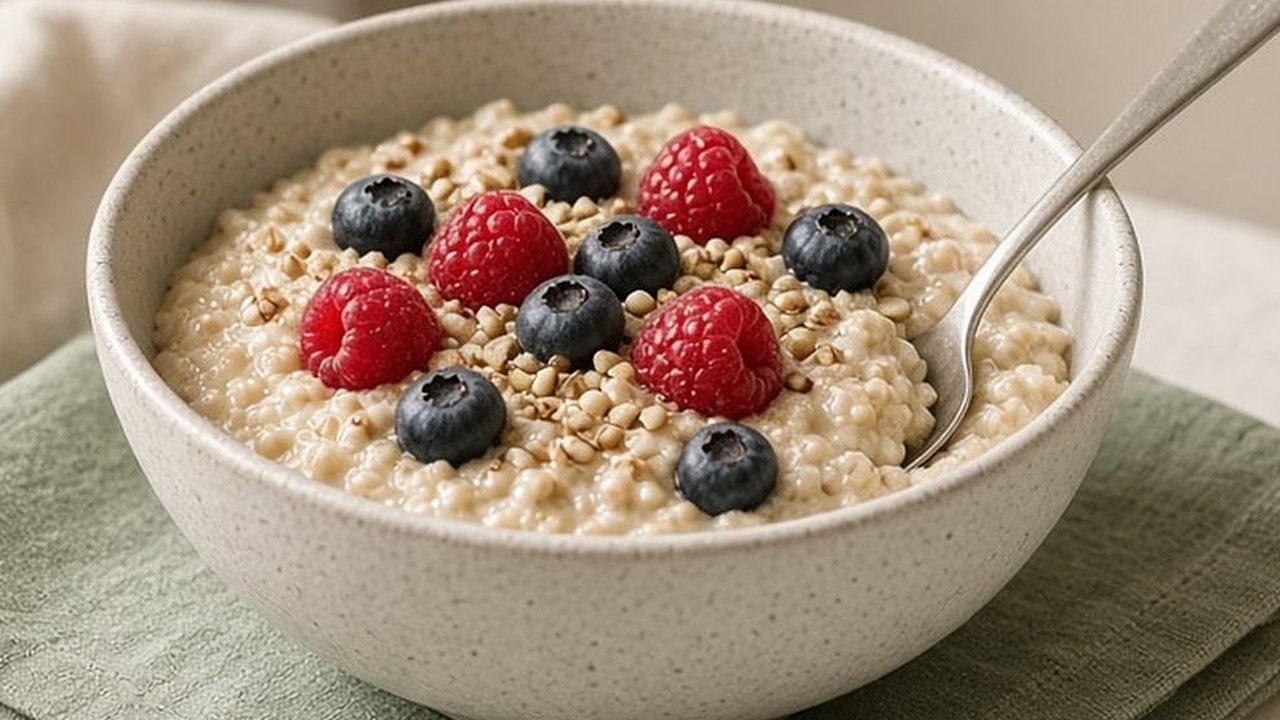
If you keep hearing “eat more fiber” but nobody explains how much or how to add it without a stomachache, this is the plain version.
Fiber is one of the few nutrients nearly every major guideline agrees most people would benefit from eating more of. It supports regular digestion, helps meals feel more filling, and is a common thread in eating patterns linked with heart and metabolic health. It is also easy to overdo all at once, which is why the slow approach matters.
Add it gradually, drink with it, and let it come from food you already like.
How much is “enough”?
The Academy of Nutrition and Dietetics explains the usual benchmark as about 14 grams of fiber for every 1,000 calories—roughly 25 to 28 grams a day for women and 28 to 34 grams for men. The Daily Value on U.S. Nutrition Facts labels is 28 grams, according to the FDA. These are population targets, not a test you pass or fail at each meal.
Two kinds, both useful
MedlinePlus describes two broad types. Soluble fiber (oats, beans, lentils, barley, many fruits) absorbs water and forms a gel; insoluble fiber (whole grains, wheat bran, many vegetables, skins) adds bulk. Most fiber-rich foods contain both. You do not need to track which is which.
Where it comes from
Examples the Academy lists include ½ cup cooked black beans (about 8 grams), a large pear with skin (about 7 grams), ½ cup mashed avocado (about 6 grams), 1 ounce of almonds (about 3.5 grams), 3 cups of air-popped popcorn (about 3 grams), and ½ cup cooked quinoa (about 2.5 grams).
- Breakfast: oats, a whole-grain cereal, or whole-grain toast; add fruit or seeds.
- Lunch: beans or lentils in soup or salad; a whole-grain wrap.
- Snacks: fruit with the skin, popcorn, nuts, hummus with vegetables.
- Dinner: half the plate vegetables when you can; brown rice, barley, or whole-grain pasta some nights.
Frozen vegetables, canned beans (rinsed), and frozen fruit count fully. See budget groceries for cheap staples.
Add it slowly, with fluids
The Academy advises increasing fiber gradually and with plenty of fluids; NIDDK makes the same point for constipation, noting that liquids help fiber work. A sudden jump can bring gas, bloating, and cramps. Try one change for a week—say, beans at lunch—then add another.
If you have irritable bowel syndrome, some high-fiber foods can be triggers; the IBS guide explains why soluble fiber is often better tolerated.
What about fiber supplements?
Food brings fiber plus vitamins, minerals, and other plant compounds. Supplements such as psyllium have trial evidence for chronic constipation, but they are not a substitute for an evaluation of new bowel changes. Ask your pharmacist or clinician before starting one, especially if you take daily medication.
When to see a clinician or registered dietitian
Talk with a clinician about new or persistent changes in bowel habits, blood in the stool, unexplained weight loss, or pain. People with certain digestive conditions are sometimes told to limit fiber for a time; follow your care team’s advice. A registered dietitian can build a fiber plan around those limits.
A short “good enough” check
- Beans, lentils, or a whole grain showed up today.
- I had fruit or vegetables at two or more eating occasions.
- I added fiber gradually and drank water with it.
- I am not forcing foods my gut clearly dislikes.
Related reads: constipation: food and fluids and gut comfort.
Sources
- Academy of Nutrition and Dietetics (eatright.org). Easy Ways to Boost Fiber in Your Daily Diet. https://www.eatright.org/health/essential-nutrients/carbohydrates/easy-ways-to-boost-fiber-in-your-daily-diet
- FDA. Daily Value on the Nutrition and Supplement Facts Labels. https://www.fda.gov/food/nutrition-facts-label/daily-value-nutrition-and-supplement-facts-labels
- MedlinePlus (National Library of Medicine). Fiber. https://medlineplus.gov/ency/article/002470.htm
- NIDDK. Eating, Diet, & Nutrition for Constipation. https://www.niddk.nih.gov/health-information/digestive-diseases/constipation/eating-diet-nutrition
- U.S. Department of Agriculture & U.S. Department of Health and Human Services. Dietary Guidelines for Americans, 2025–2030 (January 2026). https://cdn.realfood.gov/DGA.pdf
Still have questions about fiber? Our RD team would be glad to hear from you: send us a note, or join the newsletter for calm, practical ideas in your inbox.