Dinners
Weeknight dinner defaults
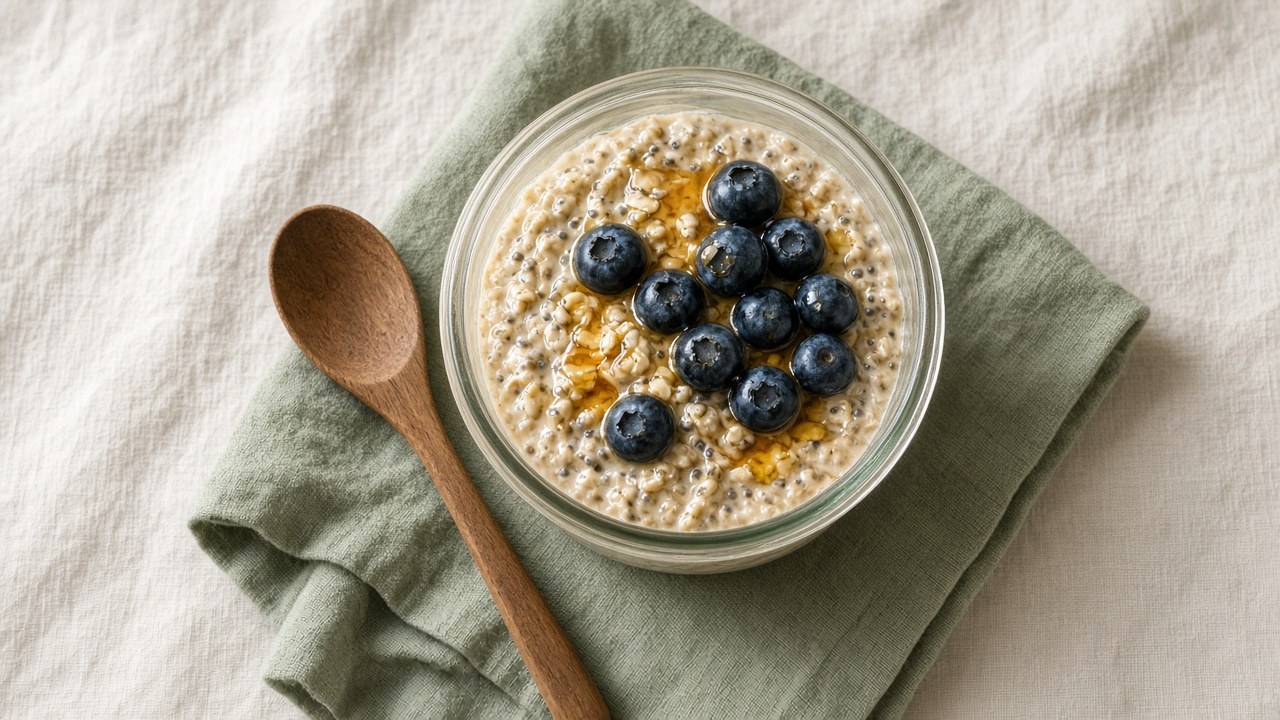
6 p.m., a hungry household, and no plan: it’s one of the most familiar moments in any kitchen, and dinner doesn’t have to be impressive to count.
The weeknight problem is rarely a missing recipe. It is 6:15 p.m., a hungry kitchen, and a decision you do not have the bandwidth to make. Our RD team treats dinner as a default you can run tired—not a performance you earn on a quiet Sunday.
Dinner is a default you can run tired, not a performance.
This page is a 20-minute logic, a leftovers plan, and a way to lower the number of choices. It is general education, not a meal plan or medical nutrition therapy. What “enough” looks like still depends on your day, your household, and any care you already have with a clinician or dietitian.
Why a new dinner every night wears you out
A fresh idea feels like competence until you are deciding it while hungry. Then the unused ingredients become evidence that you “fell off,” and the next plan gets more elaborate. That loop is the problem. Repeating two or three shapes is not boring. It is how busy adults eat.
Decision load is the hidden cost. Choosing a cuisine, a recipe, a missing ingredient, and a side is four decisions. Choosing “the egg shape” or “the leftover shape” is one. Make that choice earlier in the day if you can—on the way home, or when you put the groceries away—not when everyone is already sharp.
The 20-minute logic
Twenty minutes is a ceiling, not a personality. If it takes longer, it is not a weeknight default. The plate still has the same three jobs as a satisfying plate: a protein you can point to, a starch or other carb you already know how to heat, and a plant—fresh, frozen, or left from another meal. Pleasure is allowed. A sauce you like, cheese, or the bread on the table counts.
Three shapes cover most loud weeks. You do not need all of them every week. You need one you can start without reading.
- Heat and assemble. A protein that is already edible—rotisserie chicken, canned fish, baked tofu, cooked lentils, leftover meat—plus a starch (rice, potato, tortilla, bread, pasta) and a frozen or sturdy vegetable. Salsa, soy sauce, olive oil, or whatever you actually reach for.
- The pan you already know. Eggs, canned beans, or ground meat or tofu you can brown without a recipe, with a vegetable that can share the pan and a starch beside it. Toast and eggs is a complete dinner. So is beans, rice, and frozen broccoli.
- Leftovers, remixed on purpose. Last night’s protein in a tortilla, over an egg, or next to a new vegetable. Remixing is not a failure to cook. It is the second half of the plan.
If the clock is the constraint, start the starch first (or use one that is already cooked), then the protein, then the plant. Do not open a recipe with a shopping list at 6:15. If a step requires a special pan, a marinade, or a store run, it belongs on a weekend, not on a Tuesday.
Leftovers are the plan
Cooking once so you can eat twice is the lowest-decision version of “meal prep.” You do not need a grid of containers and a new personality. Double the protein, the grain, or the pot of beans when you are already cooking. Tomorrow’s dinner is then an assembly, not an invention. If you want the version that is still not a Sunday container project, see meal prep that doesn’t take Sunday hostage.
Keep the second portion boring enough that you will eat it: the same food, a different vehicle. Rice becomes a bowl. Chicken becomes a sandwich. Beans become tacos or toast. If you hate eating the same plate two nights in a row, change the sauce or the vegetable, not the whole menu.
A light food-safety frame many educators use: get perishable leftovers into the fridge within about two hours, use shallow containers, and eat refrigerated leftovers within about three to four days. Reheat until steaming. Smell is not a safety test. The FAQ has the same note in short form. Be stricter if someone in the house is pregnant, very young, older, or immunocompromised—and follow the clinician or local health guidance that already applies to them.
Lower the number of choices
A usable week often has one repeating dinner and one flex night, not seven originals. Examples that are intentionally plain: Monday is beans and rice, Wednesday is eggs and toast with a vegetable, Friday is whatever is left or a restaurant meal you do not narrate as a collapse. The weekend anchors guide is the other half of that rhythm—so Sunday night is not a scramble that sets up a punitive Monday.
Stock the shapes, not a fantasy menu. The grocery defaults list is this page’s shopping version: two proteins you will eat, a starch you can cook half-asleep, a plant that survives Wednesday, and a freezer backup. If the backup is tortillas, cheese, beans, and salsa, that is a dinner. It does not need a name.
Takeout and restaurants are defaults too, especially on the night the day ran long. Use them as the plan, not as evidence you failed the plan. The eating out guide is how that meal stays inside the week instead of erasing it.
What usually backfires
- A recipe that starts with “first, marinate.” If it cannot begin when you walk in, it is not a weeknight tool.
- Cooking a virtuous meal you will not eat, then snacking through the cleanup and calling the evening a write-off.
- Saving all the protein for a huge dinner after a day of tiny meals. A first meal with protein and an afternoon bridge make dinner a meal, not a rescue.
- A Sunday prep marathon that exhausts you and then rots. One doubled pot beats a color-coded fridge you resent.
A short “good enough” check
You do not need this at the stove. It is a way to look at a weeknight without a courtroom:
- I knew the shape before I was starving—or I used the backup without a speech.
- The plate had a protein I could point to, plus something that made it a meal.
- It was close to twenty minutes, or it was leftovers. Not a project.
- Tomorrow’s dinner is partly decided, or I know the backup.
- Pleasure was included on purpose, or I was fine without it.
- A restaurant night, if it happened, is still part of the week—not a relapse.
If you can tick most of those, dinner did its job. It will not guarantee a weight outcome. It will make the next evening easier to start.
The same idea lives in the cart in grocery defaults, on a tighter budget in budget groceries, and on the plate in satisfying plates. If you want a little more structure, the paid guides add worksheets in the same voice, and the newsletter is a short note—not a reboot.
Sources
- FoodSafety.gov. 4 Steps to Food Safety. https://www.foodsafety.gov/keep-food-safe/4-steps-to-food-safety
- U.S. Department of Agriculture & U.S. Department of Health and Human Services. Dietary Guidelines for Americans, 2025–2030 (January 2026). https://cdn.realfood.gov/DGA.pdf
- USDA Food Safety and Inspection Service (FSIS). Leftovers and Food Safety. https://www.fsis.usda.gov/food-safety/safe-food-handling-and-preparation/food-safety-basics/leftovers-and-food-safety
You don’t have to figure out weeknight dinners alone. If something here raised a question, reach out to our RD team, or join the newsletter for more support like this.