Steadiness
Everyday blood sugar steadiness
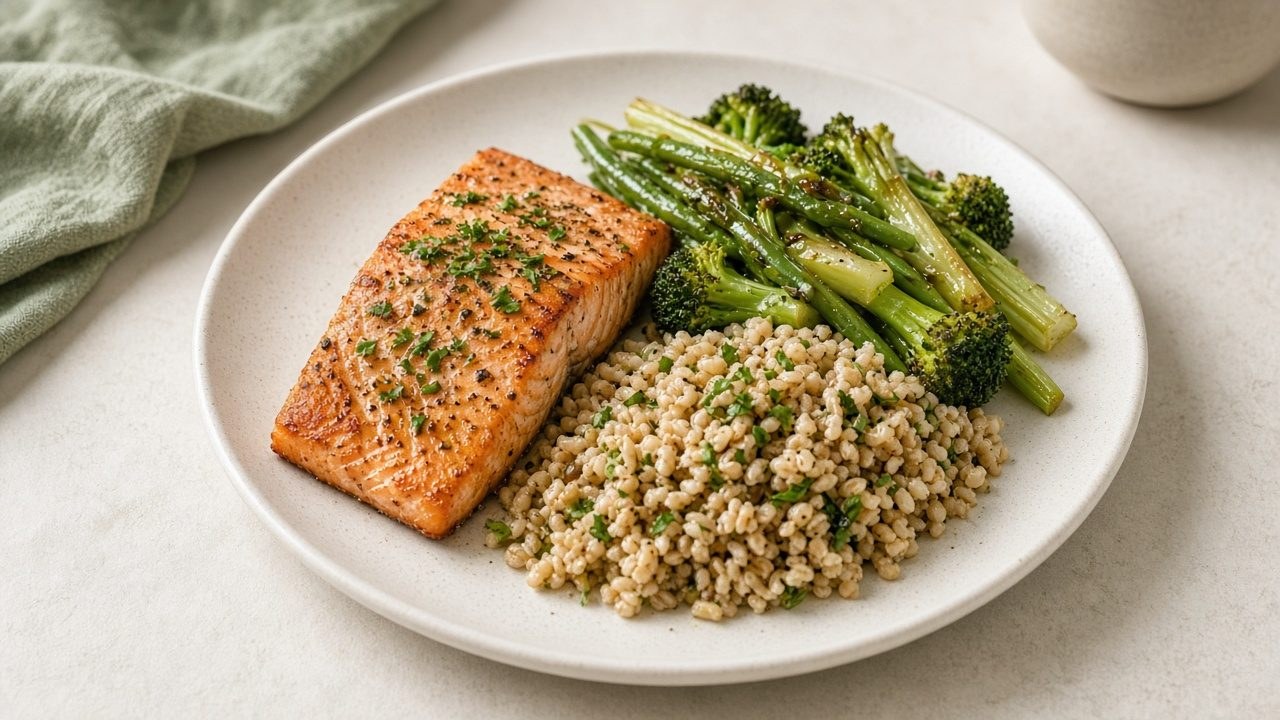
If you’re tired of the energy roller coaster or nervous about what your last labs said, it can help to know that steadier blood sugar usually starts with ordinary meals, not perfect ones.
A lot of adults notice the same afternoon: lunch was mostly a bagel or a sweet coffee, focus gets fuzzy, and the snack drawer starts to look like a plan. That pattern is worth understanding. It is not a reason to diagnose yourself from how you feel after pasta, and it is not a reason to cut every carbohydrate out of the house.
Balance and timing, not fear of fruit, bread, or rice.
This page is everyday education for people who want steadier energy. It is not a diabetes protocol. We do not interpret labs here, we do not set glucose targets, and we do not advise on insulin or other medicines. If you already have diabetes, prediabetes, or symptoms that worry you, your clinician is the right next conversation. The plate ideas below are still ordinary food—not a substitute for that care.
Steadiness is a pattern, not a number you chase at home
Without a clinical reason and a plan from your care team, most people do not need to wear a monitor or grade meals by how a line moved. “Steady” in daily life usually means: you can think in the afternoon, you are not ravenous an hour after eating, and dinner is a meal instead of a rescue. Those are useful cues. They are not a diagnosis.
Blood sugar rises after you eat carbohydrate. That is normal physiology, not a moral event. What often feels rocky is a meal that is mostly fast carbohydrate, with very little protein, fiber, or fat to slow the ride—and a long gap afterward. The fix we teach is balance and timing, not fear of fruit, bread, or rice.
What a steadier plate usually includes
You already have this shape if you have read satisfying plates. For energy that lasts, the same three jobs still apply, with carbohydrate kept in the meal on purpose:
- A protein you can point to: eggs, yogurt, tofu, fish, chicken, beans, cheese, lentils.
- A fiber-rich plant: vegetables, fruit, beans, or a whole grain you like.
- A carbohydrate that fits the meal: rice, bread, potatoes, tortillas, fruit, oats. Included, not smuggled.
- Some fat from food you already eat: olive oil, nuts, avocado, cheese, the dressing you like. Enough to make the plate satisfying. Not a measured oil protocol.
A bowl of plain pasta can be dinner if you add beans or chicken, a vegetable, and enough to feel finished. A piece of fruit with yogurt is a different experience from fruit eaten as the entire breakfast on the way out the door. The fruit was never the problem.
Skipping the starch to “be good,” then eating it later from the package because you are shaky and irritable, is the pattern we are trying to retire. Put the carb on the plate while you are calm.
Timing matters more than a perfect food list
Long gaps are a common reason the next meal feels urgent. A first meal with protein gives the morning a floor. An afternoon bridge—yogurt and fruit, cheese and crackers, hummus and bread—keeps 4 p.m. from becoming a blood-sugar rumor and a vending machine. Dinner can then be a weeknight default, not an apology.
You do not need to eat every three hours on a timer. You do need a rhythm you can repeat on a workday: a real first meal, a midday meal, a bridge if dinner is late, and an evening meal that counts. Shift workers can use the same anchors on their own clock. There is no magic window that makes a sandwich acceptable.
Sweet foods fit more easily after or beside a meal than as a stand-alone breakfast. That is a practical observation, not a ban. Dessert after dinner is allowed. Using sweets to survive an underfed day is what leaves people feeling unsteady—and then ashamed, which does not help the next meal.
Myths that make this harder than it is
- “Fruit spikes you, so skip it.” Whole fruit comes with fiber and water, and it is a reasonable carbohydrate. Pair it with protein if a piece of fruit alone leaves you hungry. You do not need to juice it, and you do not need to fear it.
- “If I feel sleepy after lunch, I must be prediabetic.” A large meal, short sleep, and a carb-only plate can all make you drowsy. Sleepiness is a cue to look at the pattern, not a lab result. Diagnosis belongs with a clinician.
- “Cutting all sugar is the only responsible choice.” Added sugars are easy to overdo in drinks and ultra-processed snacks. Removing every source of carbohydrate is a different project, and it often backfires. Start with the drink you do not even taste, not with the potato at dinner.
- “I should dose my day around a number I saw online.” Please do not. Insulin, other glucose-lowering medicines, and personal targets are clinical decisions. This site does not provide them.
Movement and drinks, lightly
A short walk after a meal helps many people feel less sluggish. That is a pleasant default, not a prescription and not something you have to earn dessert with. Water through the day is enough of a hydration plan for most adults. Sugary drinks are an easy place to experiment—one fewer, or a smaller one—because they are carbohydrate without much staying power. You do not have to quit coffee.
When this page is not the right tool
Talk with a clinician if you have symptoms that are new or strong: unusual thirst, frequent urination, unexplained weight change, blurry vision, or shakiness that worries you. If you already use insulin or other glucose-lowering medicine, do not change food timing or doses from a blog. If you are pregnant, glucose screening and follow-up belong in prenatal care. A registered dietitian who knows your history can personalize the plate. We cannot do that from a webpage.
A short “good enough” check
You do not need this at the table. It is a way to look at a day without turning it into a lab review:
- Meals had a protein I could point to, plus a carbohydrate I included on purpose.
- A plant or other fiber showed up at least once, in a form I will actually eat.
- I did not leave a long gap and then call the crash a character flaw.
- Sweets, if I had them, sat next to a meal or a planned snack—not as the only food until dinner.
- I am not interpreting how I felt as a diagnosis, and I am not adjusting medicine from this page.
- Tomorrow’s first meal is still allowed, even if today was uneven.
If you can tick most of those, the day was steady enough. It will not guarantee a lab result or a weight outcome. It will make energy feel less like a mystery.
The same plate shows up in heart-friendly plates and, on a tighter budget, in budget groceries. If you want worksheets on everyday meals, the paid guides stay in the same voice. The newsletter is a short note—not a reboot.
Sources
- American Diabetes Association. Meal Planning: The Diabetes Plate. https://diabetes.org/food-nutrition/meal-planning
- American Diabetes Association. Plan Your Diabetes Plate (2025). https://professional.diabetes.org/sites/dpro/files/2025-05/PE25-Plan-Your-Plate-FINAL-5-22-25.pdf
- Centers for Disease Control and Prevention (CDC). Prediabetes – Your Chance to Prevent Type 2 Diabetes. https://www.cdc.gov/diabetes/prevention-type-2/prediabetes-prevent-type-2.html
- NIDDK. Healthy Living with Diabetes. https://www.niddk.nih.gov/health-information/diabetes/overview/healthy-living-with-diabetes
Still have questions about blood sugar? Our RD team would be glad to hear from you: send us a note, or join the newsletter for calm, practical ideas in your inbox.