Kitchen
Budget groceries that still feel decent
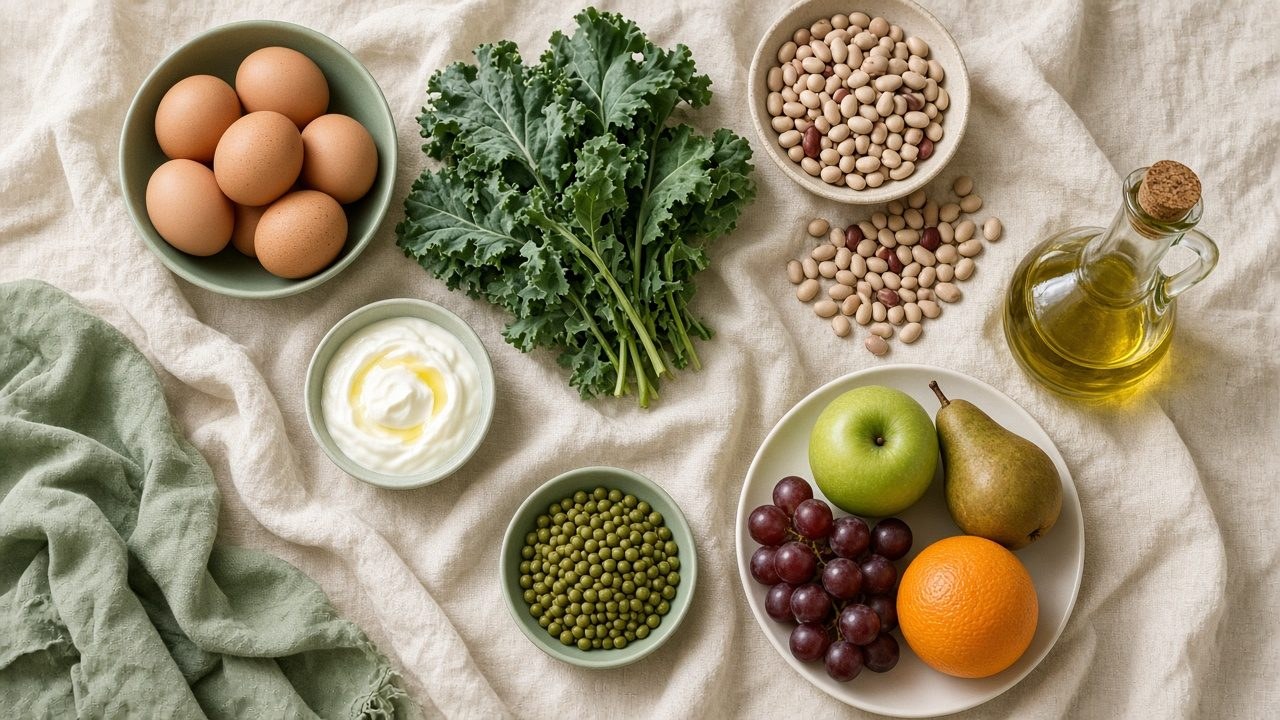
If prices at the register have you putting things back or wondering how anyone eats well on a budget, you’re dealing with something real, not a failure of planning.
A tight grocery budget is a logistics problem, not a character test. The internet version of “eating well on a budget” often assumes a spare hour, a chest freezer, and shame about convenience food. Real carts look more like: what is filling, what lasts, what your household will actually eat, and what still tastes like a meal instead of a punishment.
A tight grocery budget is a logistics problem, not a character test.
Our RD team’s default is the same shape as grocery defaults—protein, plants that survive, a starch, a bridge, a backup—with the expensive “aspirational” items left on the shelf. Enough food that feels decent beats a cheap cart nobody wants to cook.
Spend on what makes meals repeat
You do not need a new superfood. You need a few low-drama staples and one or two things that make them taste like dinner. Prices move, so think in roles, not a fixed shopping list:
- Eggs, canned tuna or sardines, dry or canned beans and lentils, tofu when it is priced fairly, peanut butter, milk or soy milk, yogurt or a block of cheese in the size you will finish, chicken thighs or a whole chicken when they are the better buy than boneless breasts.
- Oats, rice, pasta, potatoes, tortillas or a store-brand loaf. Freeze half the bread if it molds before you finish it.
- Frozen vegetables, cabbage, carrots, onions, bananas, and whatever fresh produce is genuinely inexpensive this week. Frozen fruit for oats and yogurt when berries are a luxury.
- A flavor kit that is not a different sauce every night: salt, pepper, chili, garlic if you use it, one oil, vinegar or lemon, salsa, soy sauce, or the seasoning you already reach for.
Store brands of oats, beans, canned tomatoes, frozen vegetables, and peanut butter are usually the same job as the label with the nicer font. Unit price on the shelf tag is worth a glance when two sizes sit side by side. You do not need a spreadsheet. If the big bag will go stale, the small bag is the thriftier one.
Meals that feel like meals
Decent means salty enough, warm enough, and familiar enough that people come to the table. A few shapes that stay cheap without tasting like austerity:
- Beans or lentils with rice, a frozen vegetable, and salsa or a fried egg on top.
- Peanut noodles or peanut sauce on cabbage and whatever protein you have—tofu, egg, chicken.
- Egg tacos or a tortilla with beans, cheese, and salsa. This is also a weeknight dinner, not a compromise you have to outgrow.
- Oats with milk, peanut butter, and a banana. A complete breakfast, not a sad one.
- Baked potatoes with beans, cheese, and a handful of frozen broccoli.
- Pasta with canned tomatoes, white beans or tuna, and a pinch of chili.
If a recipe needs fifteen new ingredients, it is a hobby, not a budget tool. Repeat four dinners. Repetition is how the money lasts and how decision fatigue stays down.
Where money quietly leaks
- Drinks. Soda, sweet coffee, and juices add up faster than vegetables for a lot of households. You do not have to quit. Noticing is enough to move one of them.
- Single-serve snacks you buy because the house has no bridge food. A jar of peanut butter and store-brand crackers, or yogurt in a larger tub, usually beats a week of bars. The afternoon bridge still applies when the snack is inexpensive.
- Produce you buy to feel responsible and then throw away. Frozen or sturdier plants are the thriftier “healthy” choice if the salad kit dies in the drawer.
- Meal kits and repeated delivery fees when the real issue is no default dinner. Takeout can still be the plan on the worst night. It gets expensive when it is every night because nothing at home looks edible.
Rotisserie chicken is not a failure if the price per meal beats raw chicken plus the night you would not have cooked. Do the comparison once, then decide. Convenience you will use is cheaper than virtue you will waste.
Stretching food without stretching dignity
Leftovers are a strategy: cook a pot of beans or rice bigger than tonight, and let tomorrow’s lunch be automatic. Add a vegetable and a sauce so leftovers feel chosen. “Stretching” meat by mixing it with beans is frugal and traditional in a lot of cuisines. It is not a sad trick if the bowl tastes good.
Hunger is not a budgeting tool. Skipping meals to save food for later often leads to more expensive grab-and-go eating, and it makes stress eating louder. If the cart cannot cover the week, that is a math and access problem. Food pantries, community meals, school meals, and assistance programs exist because groceries are a real expense. Using them is practical. It is not something you have to earn with a perfect diet. A dietitian who knows your situation can help with both the plate and the constraints—our pages cannot see your prices or your kitchen.
Pleasure is part of “decent”
Leave room for one thing you are glad to eat: the cereal, the cheese, the cookies, the fruit that is in season and suddenly cheap. A cart with only obligation foods gets abandoned. Plant-forward eating on a budget is mostly beans, oats, cabbage, frozen vegetables, and peanut butter—not specialty products with leaves on the label.
Kids and other eaters in the house get a say. Buying only foods they refuse is not thrifty. Pair a familiar food with one inexpensive plant, the way picky eating, without food fights describes, instead of running a second, resentful menu.
A short “good enough” check
- The cart has a protein I can repeat, a starch I know how to cook, and a plant that will not die by Wednesday.
- There is a flavor I will actually use—salsa, peanut butter, cheese, chili, something.
- I glanced at unit price once, without building a new hobby.
- I skipped the aspirational produce I know we will not eat.
- There is a backup meal for the night I do not cook, and it still tastes like food.
- I included something we like, on purpose, inside the budget I have.
If you can tick most of those, the shop was decent. It will not guarantee a weight outcome. It will make the next few days easier to feed.
Build plates from here with satisfying plates and heart-friendly plates—neither one requires expensive ingredients. The paid guides add worksheets in the same voice, and the newsletter is a short note—not a reboot.
Sources
- FDA. How to Understand and Use the Nutrition Facts Label. https://www.fda.gov/food/nutrition-facts-label/how-understand-and-use-nutrition-facts-label
- Nutrition.gov (USDA). Nutrition on a Budget. https://www.nutrition.gov/topics/food-security-and-access/nutrition-budget
- U.S. Department of Agriculture & U.S. Department of Health and Human Services. Dietary Guidelines for Americans, 2025–2030 (January 2026). https://cdn.realfood.gov/DGA.pdf
- USDA Food and Nutrition Service. Supplemental Nutrition Assistance Program (SNAP). https://www.fns.usda.gov/snap
Wherever you are with budget groceries, small steps count. If you’d like a hand, tell our RD team what’s going on, or join the newsletter to keep learning with us.