Gut
Gut comfort basics
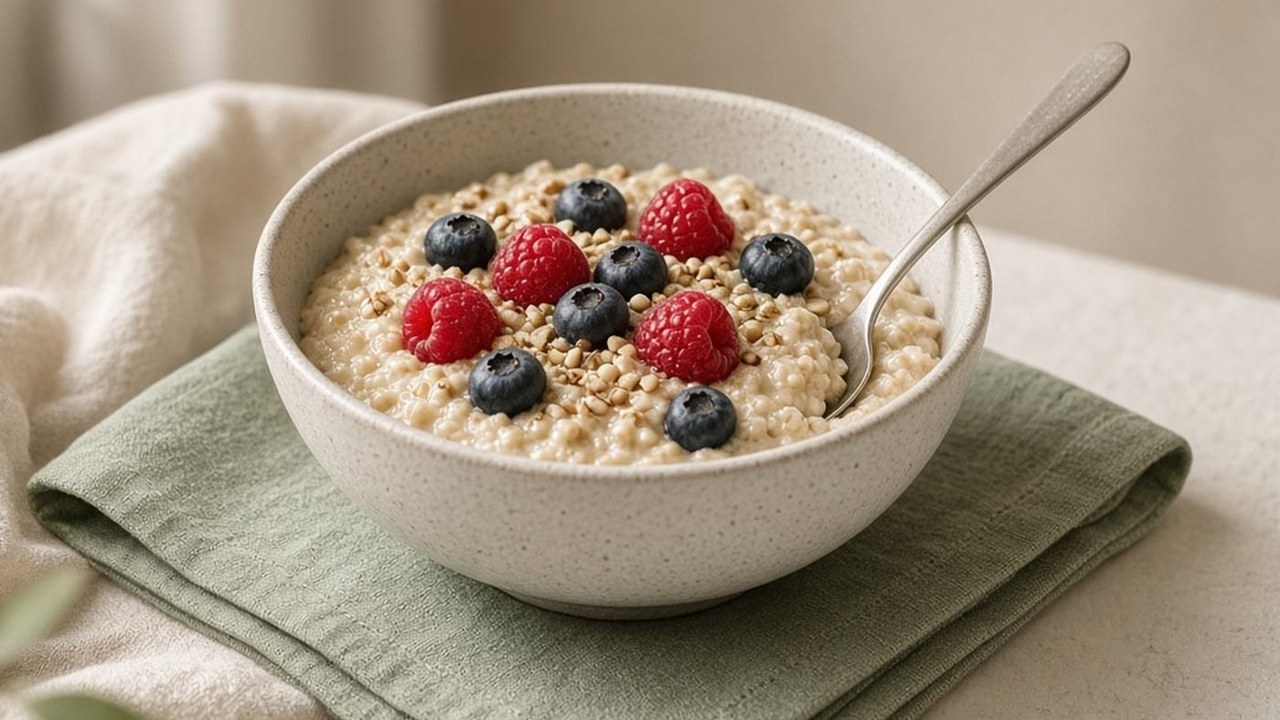
Bloating, irregularity, or a gut that just doesn’t feel right can quietly color your whole day, and it’s frustrating when every website blames a different food.
A loud gut makes ordinary eating feel like a puzzle you are failing. Bloating after lunch, a few days of constipation, or a fear that “fiber is the problem” can push people toward a long list of forbidden foods. Most of the time, the calmer first move is smaller: regular meals, a pace your gut can follow, and fiber you add gently—not a homemade elimination protocol.
Most of the time, the calmer first move is smaller.
This page is general education from our registered dietitian team. It is not a diagnosis, a low-FODMAP plan, or medical nutrition therapy. Irritable bowel syndrome, celiac disease, inflammatory bowel disease, and many other conditions need a clinician who knows your history. If a line here conflicts with that care, follow the person who knows you.
What “gentle” means
Gentle means you change one thing and give it a little time. It means cooked vegetables if raw ones leave you uncomfortable, fruit you already tolerate, oats or rice or potatoes you digest without a story, and beans in a portion you have eaten before—not a new bowl of raw salad, a fiber supplement, and a “gut reset” on the same Monday.
It also means you do not skip meals to “rest the stomach,” then eat one huge plate at night. A steady rhythm—breakfast or a first meal, lunch, an afternoon bridge if the gap is long, and dinner—gives the gut a predictable job. Predictable is often more comfortable than perfect.
Fiber, without the heroics
Fiber helps many adults with regularity and with meals that last. Public-health ballparks often land near 14 grams per 1,000 calories—about 25–28 grams a day for women and 28–34 grams for men, depending on age (Academy of Nutrition and Dietetics). The fiber guide has easy swaps. Those are educational reference points, not a target you have to hit, and not a prescription. A lot of people feel worse when they jump from very little fiber to “all the fiber” in a weekend.
Food first, in forms you will actually eat: oats, fruit, beans and lentils in amounts you tolerate, whole-grain bread if you like it, cooked vegetables, nuts or seeds in a snack you already have. Frozen vegetables count. The grocery defaults list is a practical way to keep one or two of these in the house without a new identity.
Increase gradually, and drink fluids alongside. Fiber without fluid is a common reason a “healthy” week feels worse, not better. If a sudden increase in beans, bran, or a supplement leaves you painfully bloated, step back. That is information. It is not proof that plants are unsafe for you.
Some people do better with more cooked, softer plants than with large raw salads. Some do better with soluble-feeling foods—oats, peeled fruit, rice—while they sort out a flare. Neither choice is a lifelong ban list. A satisfying plate can still include a protein, a starch, and a plant that sits well.
Bloating myths
- “Bloating means I should cut gluten, dairy, and everything else.” Occasional fullness after a large meal, carbonated drinks, eating fast, or a big jump in fiber is ordinary. It is not a diagnosis. Removing several food groups at once makes nutrition thinner and the experiment impossible to read. Lasting pain, weight loss you did not intend, blood, vomiting, or symptoms that wake you at night are reasons to call a clinician—not reasons to start a stricter internet diet.
- “A flat stomach is the measure.” Abdominal size changes through the day, with the menstrual cycle, with salt, and with posture. Comfort and a meal you can repeat matter more than a mirror check at 8 p.m.
- “I need a cleanse.” You do not. Juices, teas, and “gut detox” products are not a treatment. They often replace meals and can worsen diarrhea or constipation, depending on the person.
- “Probiotics fix this.” Some people find a specific product helpful; many do not. We do not recommend a strain or a dose here. If you want to try one, bring it to your clinician or dietitian, especially if you are immunocompromised or already on a treatment plan.
Pace and air matter more than people expect. Eating more slowly, putting the fork down, and noticing gum, straws, and sparkling drinks is a low-stakes experiment. So is loosening a waistband that is doing half the discomfort. None of that replaces medical care if symptoms are new, severe, or changing.
Constipation myths
- “More fiber always fixes it.” If you are already eating a lot of fiber and very little fluid, more bran can make things worse. Fluid, a regular chance to use the bathroom, movement you already do (a walk counts), and a look at medicines and routines often matter as much as another vegetable. Some medicines slow the gut. That conversation belongs with the prescriber, not with a higher dose you invent.
- “Coffee, a cleanse, or skipping dinner will reset me.” Stimulating the gut and then under-eating is not a plan. A normal next meal, with fluid, is safer than a fast dressed up as a reset.
- “I should only eat ‘easy’ white foods forever.” A few gentler meals during a rough patch can be kind. A permanent plate with no plants is not a gut treatment, and it often makes constipation more likely over time.
Prunes, kiwi, oats, ground flax in a food you already eat, and warm fluids help some people. They are foods, not a protocol. If you have needed laxatives often, or constipation is new and sticking around, ask a clinician before you build a supplement routine. We will not list doses or products here.
What we are not doing on this page
We are not walking you through an elimination diet, a low-FODMAP sequence, a parasite cleanse, or a list of “never” foods. Those tools, when they are appropriate, are clinical. Used as a solo project they often shrink intake, raise fear, and still do not answer whether something medical is going on. If you already have a plan from a gastroenterology clinician or a dietitian, this page does not replace it.
Meals can stay ordinary while you wait for that visit: protein you tolerate, a starch that sits well, a plant in a form that does not pick a fight, and enough to drink. The weeknight dinner defaults still apply—simple shapes, not a therapeutic menu.
A short “good enough” check
You do not need this as a symptom diary. It is a way to look at a week without a courtroom:
- Meals happened on a rhythm, instead of one huge plate after a long fast.
- Fiber changed gradually, with fluids—not all at once.
- I did not start a multi-food elimination because of one bloated afternoon.
- A plant showed up in a form I can tolerate, even if it was cooked or frozen.
- Movement and a bathroom routine were allowed to count as care.
- New, severe, or persistent symptoms have a clinician, not only a webpage.
If you can tick most of those, the week did the job this guide is for. It will not diagnose you, and it will not guarantee a weight outcome. It will make eating feel less like a test.
Related everyday pieces: satisfying plates, grocery defaults, plant-forward eating, and sleep, stress, and appetite—because a short night and a clenched day show up in the gut too. If you want worksheets on the everyday themes, the paid guides stay in the same voice. The newsletter is a short note—not a reboot.
Sources
- Academy of Nutrition and Dietetics (eatright.org). Easy Ways to Boost Fiber in Your Daily Diet. https://www.eatright.org/health/essential-nutrients/carbohydrates/easy-ways-to-boost-fiber-in-your-daily-diet
- NCCIH. Probiotics: What You Need To Know. https://www.nccih.nih.gov/health/probiotics-what-you-need-to-know
- NIDDK. Eating, Diet, & Nutrition for Constipation. https://www.niddk.nih.gov/health-information/digestive-diseases/constipation/eating-diet-nutrition
- NIDDK. Eating, Diet, & Nutrition for Gas in the Digestive Tract. https://www.niddk.nih.gov/health-information/digestive-diseases/gas-digestive-tract/eating-diet-nutrition
Still have questions about gut comfort? Our RD team would be glad to hear from you: send us a note, or join the newsletter for calm, practical ideas in your inbox.