Body topics
Iron in everyday food, without a DIY protocol
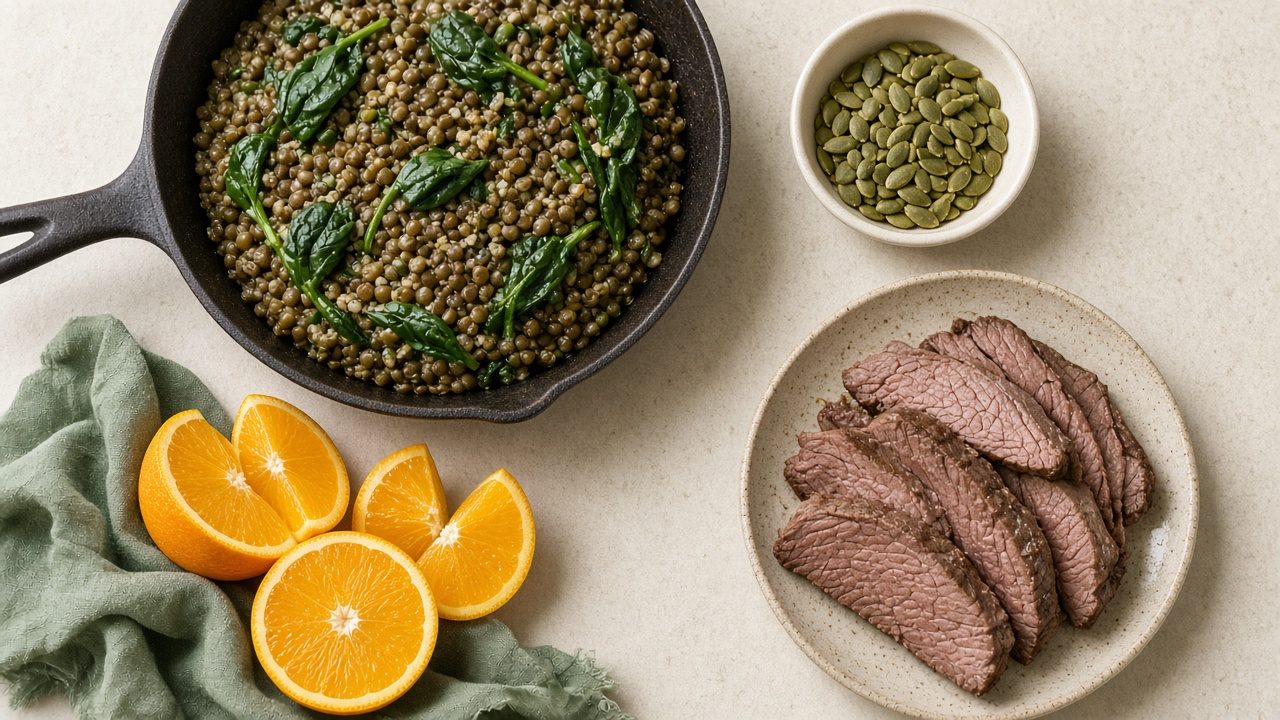
If you’ve been told your iron is low, or you’re tired and wondering whether iron is the reason, it’s understandable to want a clear answer quickly.
Iron shows up in two places online: as a reason to fear vegetarian meals, and as a bottle you should start because you are tired. Both skip the useful middle. Food pattern matters. So do labs. Fatigue has a long list of causes, and anemia is a medical diagnosis, not a feeling you confirm with a supplement aisle.
Tired is a reason to ask for labs, not a reason to dose yourself.
This page is general education from our registered dietitian team. It does not diagnose iron deficiency or anemia, and it does not set a supplement dose. Too much iron is harmful, including in hereditary hemochromatosis, where extra iron is the problem. Children can be poisoned by adult iron pills. Do not start high-dose iron because an article, a podcast, or a friend did. If you are pregnant, on a clinician’s iron plan, or being treated for a blood disorder, follow that plan.
Heme and non-heme, in plain language
Food iron comes in two forms.
- Heme iron is in meat, poultry, and seafood. Your body absorbs it more readily. A plate with salmon, chicken, beef, or mussels is an ordinary way to include it. You do not have to eat red meat daily for iron to exist in the week. Heart-friendly plates and this page can live together: frequency and the rest of the meal, not a single steak as medicine.
- Non-heme iron is in beans, lentils, tofu, nuts, seeds, fortified cereals and breads, and some vegetables. Spinach contains iron, and it also contains compounds that make that iron harder to absorb. A spinach salad is still a fine food. It is not an iron infusion.
Plant-forward eaters can meet iron needs with a pattern, not a panic. Plant-forward, without perfection is the how. If you eat little or no meat and you are exhausted, pregnant, or having very heavy periods, that is a lab conversation, not a cue to eat parsley by the bunch.
What helps absorption—and what gets in the way
These are meal experiments, not a protocol.
- Vitamin C–rich foods with plant iron: citrus, strawberries, kiwi, bell pepper, tomato, or broccoli on the same plate as beans, lentils, or tofu. A salsa on black beans counts. You do not need a powder.
- Meat, poultry, or fish next to plant foods can also help the non-heme iron along. A little chicken in a bean chili is a normal pot, not a compromise.
- Tea and coffee with the meal can reduce absorption of non-heme iron because of their polyphenols. If you are working on iron and you like tea, a gentle experiment is to have the tea between meals rather than on top of the lentil bowl. This is not a ban, and it will not treat anemia by itself. Alcohol and caffeine is the wider “is this fine?” frame.
- Calcium supplements and iron supplements compete when they are taken at the same moment. Food calcium in a mixed meal is usually a different story from two pills together. If you have been prescribed both, ask the prescriber about timing. Do not invent a schedule that skips a medicine.
- A cast-iron pan can add a little iron to food, especially acidic foods like tomato sauce. It is a small kitchen fact, not a treatment.
Who should get labs instead of a DIY plan
Ask a clinician for bloodwork rather than starting iron on your own if any of these are true:
- Fatigue, shortness of breath, dizziness, or ice craving that is new or persistent.
- Very heavy menstrual bleeding, pregnancy, or the months after birth. Postpartum eating is its own guide—postpartum eating—and it is not an iron prescription.
- A vegetarian or vegan pattern plus symptoms, or a diet that has become very narrow.
- Known stomach or intestinal disease, bariatric surgery, or a clinician who already mentioned iron.
- You are considering a supplement “just in case.” Just in case is how people with undiagnosed iron overload get hurt, and how children find bottles that should have been stored up high.
A normal energy dip at 3 p.m. is often lunch, sleep, and a missing snack. The afternoon bridge is the first experiment. It is not a ferritin test. We will not tell you your number, and we will not tell you that food alone will correct a deficiency. Sometimes food is the long game and a prescribed supplement is the short one. That decision is clinical.
Plates that include iron without a project
- Lentil soup with tomatoes, and toast.
- Chili with beans and, if you eat it, some beef—or tofu chili with peppers.
- Fortified breakfast cereal with fruit, or eggs with beans and salsa.
- Salmon or another fish with grains and vegetables, as on a satisfying plate.
- A handful of pumpkin seeds or hummus as a snack, not as your only strategy.
None of these is a cure. They are meals you can repeat while someone qualified reads the labs. Skip charcoal, “iron drops” from an unregulated shop, and any cleanse that claims to fix blood. Detox myths covers why that genre does not treat a deficiency.
A short “good enough” check
- I can name a heme source, a plant source, or both that I actually eat.
- Plant-iron meals sometimes include a vitamin C food, without a spreadsheet.
- If I am working on iron, tea and coffee are not always sitting on top of the bean bowl—or I have decided that experiment can wait.
- I did not start high-dose iron without labs, and pills are stored where children cannot reach them.
- Fatigue that worries me is on a list for a clinician, not only for a new food rule.
- A prescribed dose, if I have one, still outranks this page.
If you can tick most of those, iron had a food context. It did not become a self-treatment. That is the point.
Sources
- NIH ODS. Iron: Fact Sheet for Consumers. https://ods.od.nih.gov/factsheets/Iron-Consumer/
- NIH ODS. Vitamin B12: Fact Sheet for Consumers. https://ods.od.nih.gov/factsheets/VitaminB12-Consumer/
- U.S. Department of Agriculture & U.S. Department of Health and Human Services. Dietary Guidelines for Americans, 2025–2030 (January 2026). https://cdn.realfood.gov/DGA.pdf
Still have questions about iron? Our RD team would be glad to hear from you: send us a note, or join the newsletter for calm, practical ideas in your inbox.