Life stages
Eating well at every age
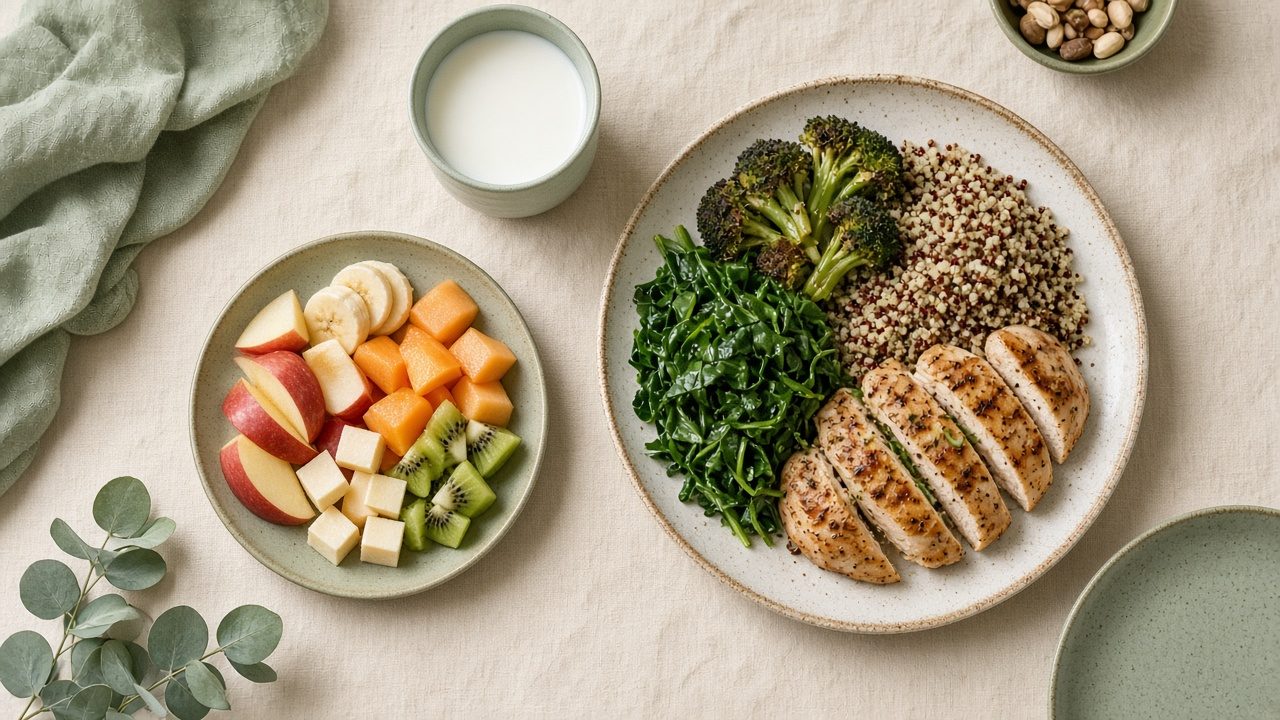
Nutrition questions change as life does, from feeding a baby to supporting a teen to caring for an aging parent, and it’s normal to feel like the rules keep moving.
Needs change from pregnancy to older age. The useful idea does not: regular meals, a protein you can point to, plants and fiber, enough fluid, and foods people actually enjoy. What usually fails is a new set of rules every time the household changes—or a food fight dressed up as health.
Needs change. The useful idea does not: regular meals you actually enjoy.
This page is a calm map for parents and adults. It is general education from our registered dietitian team, not a meal plan, a feeding protocol, or personalized medical nutrition therapy. Growth, pregnancy, allergies, medicines, and appetite all belong with a clinician who knows the person in front of them.
How to use this page
Read the stage you are in, or the one you are feeding. Skip the rest. You do not need to optimize every age at once. If a line here conflicts with advice from your obstetric clinician, pediatric clinician, or dietitian, follow the person who knows the history.
- Pregnancy and expecting
- Babies and infancy
- Toddlers and children
- Teens
- College and young adults
- Busy adults
- Older adults
Pregnancy and expecting
Pregnancy is not a test of how “clean” you can eat, and it is not a free pass to ignore meals either. The everyday job is steady food, a prenatal plan you made with a clinician, and enough kindness that nausea or a weird craving does not become a story about failure.
What usually helps
- Eat on a rhythm you can keep: smaller meals if nausea is loud, a fuller plate when it is not. A protein you can point to—eggs, yogurt, cheese, beans, tofu, fish you have cleared as lower-mercury, meat, or a nut butter—plus a carb you tolerate, beats a perfect menu you skip.
- Folate matters early, often before a pregnancy is obvious. Public-health guidance commonly includes a folic acid supplement (often 400 micrograms daily) starting before conception and in early pregnancy. The form and dose are a clinician decision if you have a history that changes the usual recommendation.
- Iron-rich foods help many people as pregnancy goes on: meat, beans, lentils, fortified cereal, and leafy greens, ideally with a vitamin C food such as citrus or peppers. Whether you need an iron supplement is a lab and clinician question, not a grocery guess.
- Food safety is ordinary caution, not a personality: skip unpasteurized dairy and juices, raw or undercooked meat, poultry, and eggs, and raw sprouts if your clinician says so. Use a public-health fish list for mercury rather than a social-media ban list. Alcohol is the one most clinicians ask people to avoid entirely in pregnancy—there is no agreed “safe” amount.
- Keep a few defaults in the house for the days cooking is unrealistic. The same idea as grocery defaults: yogurt, eggs, fruit, bread, canned beans, frozen vegetables, and something you are glad to eat.
Myths and pitfalls
- “Eating for two” does not mean twice the food. Energy needs rise later, and not by a second adult plate. Appetite is a cue; it is not a target you have to hit or restrain on your own.
- A green juice, a detox, or a long list of “forbidden” foods does not make a pregnancy safer. Restriction can crowd out iron, protein, and the meals you can keep down.
- Caffeine is usually discussed as “moderate,” including coffee, tea, and soda. Ask what that means for you instead of copying a number from a forum. Energy drinks are a poor stand-in for a meal.
- Weight comments—from apps, relatives, or your own inner narrator—are not nutrition care. Gain patterns are monitored in prenatal care. They are not a home project.
How partners can support without food fights
Stock the foods that are actually getting eaten. Do not audit the plate. Offer to handle the grocery default list, and skip lectures about what a “good” pregnant person eats. If nausea makes only one food possible this week, that food is the plan until a clinician says otherwise.
When to check with a clinician or dietitian. Vomiting that keeps you from keeping fluids down, dizziness, little urine, or weight loss you did not expect. A history of diabetes, bariatric surgery, an eating disorder, thyroid disease, or a very limited diet (including vegan patterns, where B12, iron, iodine, and choline need a real plan). Any supplement stack beyond a standard prenatal. Questions about fish, herbal products, or a prior pregnancy complication. Bring the list of what you take. Do not add herbs because a bottle says “for pregnancy.”
The weeks after birth are a different job—recovery, sleep debt, and feeding a baby if you are. That is the postpartum eating guide: supportive meals, not a lactation protocol or a bounce-back plan.
Babies and infancy
For about the first six months, breast milk or infant formula is the food. Solids, when they start, are practice and nutrition added on—not a replacement you rush, and not a project that proves you are a good parent.
What usually helps
- Feed responsively. For milk feeds, that means watching hunger and fullness instead of forcing a finish. For solids, offer, sit with them, and let them set the pace. A baby who turns away is done, even if the bowl is not empty.
- Readiness for solids is a cluster of cues, usually around the middle of the first year—not a birthday you must hit, and not something to start in the early months because a relative is impatient. Common cues include sitting with support and steady head control, interest in food, and bringing hands and objects to the mouth. Your pediatric clinician confirms timing, especially if growth, prematurity, or reflux is already on the table.
- Once solids start, iron-rich foods matter, particularly for babies fed breast milk: meats, beans mashed smooth, iron-fortified infant cereal, tofu, or egg if you have introduced it. Soft texture and a seated baby matter more than a trendy method.
- Common allergenic foods (such as egg or peanut in an age-safe form) are often introduced around the same time as other solids for many infants, not delayed for years. Eczema, a strong family history, or any past reaction changes that conversation. It belongs with the pediatric clinician, not a webpage.
- Water in a cup can come in small amounts with meals once solids are underway. Milk feeds still do the heavy lifting until the first birthday. Whole cow’s milk is not the main drink before 12 months. Infant formula is the formula—never homemade, never diluted to “stretch” it.
Myths and pitfalls
- Honey is not for babies under one year, because of infant botulism. That includes honey in baked goods you are unsure about and honey on a pacifier.
- Choking hazard is about form and supervision: a seated baby, an adult nearby, and foods that are not hard, round, or sticky. Whole grapes, nuts, popcorn, and chunks of raw hard vegetables are common examples adults underestimate. This is not a full texture chart—ask for one if you are unsure.
- A pouch is a convenience, not a complete education in eating. Babies also need practice with spoons, fingers, and varying textures when they are ready. Squeezing every meal from a pouch is not a failure, and it is not the only skill.
- Comparing ounces and jar counts in a group chat makes feeding look like a score. Growth is checked over time by someone who can see the baby.
How parents can support without food fights
You decide what is offered and when the meal happens. The baby decides whether to eat and how much. Wiping a face in silence teaches more than “one more bite.” Keep milk feeds steady so solids are not a battleground for calories. If you are tired, a simple mashed food you trust is enough.
When to check with a clinician or dietitian. Poor weight gain or a drop on the growth curve, fewer wet diapers, blood or mucus in stool, rash or vomiting after a food, coughing or color change while eating, or feeding that has become consistently distressing. Formula questions, cow’s-milk protein concerns, and reflux that worries you are medical conversations. Do not switch formulas in a loop because a forum ranked them. Do not start juices, herbal teas, or adult vitamin drops on your own.
Toddlers and children
Appetite in childhood swings. A toddler may eat a large breakfast and ignore dinner, then do the reverse tomorrow. That is ordinary. The parent job is a reliable structure. The child job is whether and how much to eat inside that structure. Ellyn Satter’s division of responsibility is the educational frame we come back to: you provide the meal; they manage their body.
What usually helps
- Offer meals and one or two planned snacks, then leave a gap so hunger can show up. Grazing from the snack cabinet all afternoon makes dinner look like rejection when it is mostly timing.
- Put a protein, a familiar carb, and a fruit or vegetable on the table without a speech. Include at least one food you know they usually eat, so the meal is not a dare. New foods can sit on the plate for weeks before they are tasted. Exposure counts even when the bite does not happen.
- Milk is a food, not a beverage to refill all day. Large volumes of milk (or juice) often crowd out iron-rich meals. Water is the default drink between meals. A cup with the meal is enough for most children.
- Keep the grocery defaults idea, sized for a family: eggs, yogurt, beans, a cheese, fruit you will see, bread or tortillas, frozen vegetables, and one dinner you can repeat. Children eat what is around. So do adults.
- Serve family food when you can, adjusted for texture and salt if needed—not a separate “kid menu” of only beige foods, and not a rule that everyone must eat the kale.
Myths and pitfalls
- The clean-plate club teaches children to ignore fullness. Stopping when they are done is a skill, not rudeness.
- Bribing with dessert (“three more bites, then cookies”) makes the vegetable the chore and the sweet the prize. Dessert can be part of the meal sometimes, offered without a negotiation, or it can be absent. Either is calmer than a bargain.
- Labeling a child “picky” as an identity, or praising another child as “a good eater,” turns food into character. Short-term selective eating is common. A diet shrinking toward only a handful of foods, with distress, is different—that is a check-in, not a lecture.
- Kids do not need weight-loss talk, diet foods, or your restriction rules. They are growing. Commenting on their body, or yours, at the table teaches them to police food.
How parents can support without food fights
Decide the menu without a debate in the kitchen doorway. Serve it. Sit down if you can. Talk about the day, not the bites. If they leave the broccoli, the broccoli can appear again next week. Pressure, cheering, and short-order cooking all raise the temperature. The picky eating guide is the longer, pressure-free version of this idea. You can say “you don’t have to eat it” and still not cook a second meal. That is structure, not punishment. Repeated exposure plus no applause is slower than a fight, and it works more often.
When to check with a clinician or dietitian. Growth that is falling off or accelerating in a way your clinician flags, fatigue, a very limited diet, ongoing constipation, suspected allergy or celiac disease, or mealtime distress that is taking over the house. Iron deficiency is common enough in young children that “they seem fine” is not a lab test. A pediatric dietitian is the right person if feeding has become a daily battle or growth is a concern. Do not start elimination diets for behavior or “inflammation” without a clinician.
Teens
Teens are building bone, muscle, and a social life at the same time. Energy needs are often high, especially during growth spurts and sports. The risk at this age is not only “too much junk.” It is also under-eating dressed up as discipline—skipped meals, diet talk from peers or feeds, and sports culture that praises being lighter.
What usually helps
- A real first meal, with protein, still matters. See first-meal protein. If mornings are chaos, a yogurt, a cheese stick and fruit, or last night’s leftovers in a container counts. Coffee is not breakfast.
- Iron needs rise, especially with menstrual periods. Include iron-rich foods across the week, not as a single “health” dinner. Calcium and vitamin D matter for bone; food first (dairy or fortified soy foods), and supplements only if a clinician recommends them.
- Athletes need fuel before and after practices. A snack with carbohydrate and some protein—yogurt and fruit, a sandwich, chocolate milk, beans and tortillas—is training food, not a slip. Playing hard on an empty tank is not dedication. The longer, still non-protocol version is sports and active kids fueling.
- Keep easy food visible: fruit on the counter, bread, eggs, leftovers they can reheat without a performance. Teens will not reliably cook a composed plate after school. A default they can grab prevents the “nothing until 9 p.m.” slide.
- Sleep changes appetite. Short nights make hunger louder and “easy” food more appealing. The sleep, stress, and appetite guide is as relevant at sixteen as at forty.
Myths and pitfalls
- Dieting in adolescence is a common on-ramp to disordered eating. “Getting healthy” language that is really about shrinking a growing body is not neutral.
- Energy drinks and a large caffeine habit are not a substitute for food or sleep. They can also disturb the very sleep that would have helped appetite.
- Supplements marketed to teen athletes—fat burners, testosterone boosters, high-dose pre-workouts—are not a rite of passage. Many are poorly tested. Some are unsafe. A basic meal beats a scoop.
- Comparing bodies in the house, even as a joke, lands harder than adults remember.
How parents can support without food fights
Keep meals predictable enough that a teen can show up, and low-pressure enough that they will. Stock food. Do not comment on portions, seconds, or body size—theirs or yours. Curiosity beats surveillance: “What sounds good for after practice?” rather than “Should you be eating that?” If they are exploring vegetarian eating, help them include protein, iron, and B12 sources instead of arguing the label. If diet talk shows up, you can say that this house does not do food rules that shrink people, and mean it about your own plate too.
When to check with a clinician or dietitian. Sooner rather than later if you see rapid weight change, dizziness, fainting, missed periods, hiding food, cutting out more and more foods, vomiting after meals, compulsive exercise, or a mood shift tied to eating. Stress fractures, fatigue that does not match the schedule, or a sports coach pushing weight loss are reasons to call, not to wait for a semester to end. Pediatric and adolescent clinicians, and dietitians who work with eating disorders, are the right door. Do not try to “correct” a suspected eating disorder with a stricter family meal plan from the internet.
College and young adults
The structure of home meals disappears, and so does the grocery shop someone else did. Dining halls, shift work, tight money, alcohol, and irregular sleep are the actual context. Nutrition here is a few repeatable defaults, not a fridge that looks like a magazine.
What usually helps
- Treat the first meal as a cue, whenever it happens. Eggs, Greek yogurt, cottage cheese, tofu, beans, or a dining-hall plate with an obvious protein—then a carb and a fruit if you can. The first-meal protein guide still applies if that meal is at 11 a.m.
- Build a tiny shelf, not a new personality. Oats, peanut butter, tortillas, canned beans, eggs, fruit that survives, and a frozen vegetable cover a lot of weeks. That is the college version of grocery defaults.
- In a dining hall, the same three jobs as any satisfying plate: protein you can point to, a plant or fiber, and the part you actually want. You do not have to skip the pizza. Add a protein and a plant if the slice was the whole meal and you are still going to be up studying.
- Plan for the long gap. An afternoon class block with no food becomes a night of whatever is nearest. A yogurt or a peanut-butter sandwich in the bag is an afternoon bridge, not a diet tactic.
- If you drink, eat first. Alcohol on an empty stomach is a worse meal than the late slice people moralize about. A normal breakfast the next day matters more than a compensatory fast.
Myths and pitfalls
- “College kids live on ramen” is a budget story, not a biology recommendation. Ramen can sit next to an egg, tofu, or canned beans and frozen vegetables. The broth package alone is not dinner forever.
- Skipping meals to “save calories” for going out is the same all-or-nothing spiral as eating out, just with a different room. You are allowed a dinner and a night out.
- Supplements, detox teas, and “bulking” powders are heavily marketed at this age. Most people need a cheaper meal more than a tub. If you use a protein powder, it is a convenience food, not a plan.
- All-nighters plus energy drinks make appetite chaotic the next day. That is physiology. It is not proof you “have no discipline.”
How parents can support without food fights
If you are sending a young adult off, pack defaults, not rules: a jar of peanut butter, oats, a reusable cup, and permission to eat dining-hall food without a report. Care packages of snacks they like are support. Weigh-ins, comments about the “freshman fifteen,” and photo scrutiny are not. If you are the young adult, you do not owe anyone a before-and-after. Roommates’ diets are not your assignment.
When to check with a clinician or dietitian. Dizziness, missed periods, a rapidly shrinking or expanding diet driven by fear, purging, or alcohol use that is crowding out meals and classes. A limited budget that has become food insecurity—campus basic-needs offices exist for this, and using them is practical, not a failure. New GI symptoms, a vegan pattern with no B12 source, or labs a clinician already flagged. Student health is a reasonable first stop.
Busy adults
Midlife nutrition problems are often logistics. Meetings run through lunch. Dinner is whatever survived the commute. Sleep is short. A parent is also feeding children or aging parents. The goal is not a tighter diet. It is a week that still contains protein, plants, and meals you do not have to renegotiate every day.
What usually helps
- Repeat a first meal with protein most days. It steadies the morning more reliably than a new calorie target.
- Put an afternoon bridge in the day before you are making dinner decisions from empty. Yogurt, cheese and fruit, hummus and crackers, or leftovers.
- Keep grocery defaults and two or three dinners you can cook tired—the weeknight defaults are that short list in the evening. Frozen vegetables and a rotisserie chicken are a legitimate adult meal.
- Spread protein across the day rather than saving it all for a large dinner. That pattern supports satiety and the muscle you want to keep as the decades stack up. You do not need an app to notice whether lunch had a protein.
- Restaurants and work travel count as your actual nutrition. Use eating out so one dinner does not become a lost week. On loud weeks, sleep and stress explain a lot of evening appetite—plan for it instead of prosecuting it.
Myths and pitfalls
- A Monday reboot after a full weekend does not age well. Neither does skipping meals to “make up” for a dinner out. Continuity beats compensation.
- Perimenopause and midlife can change sleep, appetite, and where weight sits. That is a reason for steadier meals and strength work you can keep, not a 1,200-calorie template from an ad. The midlife and menopause guide stays at that altitude. Symptom management and hormone questions belong with your clinician.
- A long supplement list rarely fixes a day with no lunch. Food pattern first. Bring bottles to a visit if you want them sorted.
- Eating “perfectly” in front of children while describing food as good or bad hands them the food fight early. The same plate can feed you and model something calmer.
Feeding yourself while feeding everyone else
Parents in this stage often eat the crusts and call it dinner. Build your plate when you build theirs—protein, a starch, a plant—not a bar eaten over the sink after bedtime unless that is truly the only window. If the only window is late, make the late meal a real one instead of a negotiation with yourself. You do not have to perform restraint to be a responsible adult.
When to check with a clinician or dietitian. New diagnoses, a stack of medications, labs you do not understand, GI symptoms, pregnancy, or an eating pattern that has become rigid or chaotic. Diabetes, kidney disease, celiac disease, a history of bariatric surgery, and significant unintended weight change need individualized care—this site cannot supply that. A registered dietitian is appropriate when you want the pattern looked at with your schedule and history, not a generic menu.
Older adults
Appetite often softens with age, while the need for protein, and for meals that are easy to chew and easy to shop for, does not. Unintentional weight loss is not a victory in this season. It is a reason to pay attention. So is eating alone every day if that has quietly become the norm.
What usually helps
- Put protein on each meal in a form that is realistic: eggs, yogurt, milk or fortified soy milk, fish, tofu, beans, cheese, poultry, or a prepared option you will actually open. A piece of toast alone is a snack. Toast and eggs, or toast and beans, is a meal.
- If portions feel like too much, aim for smaller meals more often rather than skipping. Nutrient-dense foods beat large plates that go unfinished: yogurt with fruit, soup with beans, a sandwich with cheese or tuna, frozen vegetables added to eggs.
- Drink on a rhythm. Thirst becomes a later signal for many older adults. A glass with each meal and one between is a simple default, unless a clinician has given you a fluid limit.
- Keep fiber, and keep fluids with it. Fruit, oats, beans, and soft vegetables help regularity. Increase gradually if intake has been low. Dental pain and missing teeth change texture: soft proteins and cooked plants still count. Tell a dentist if eating hurts. Pain is not a personality.
- Vitamin B12 absorption often declines with age, and some medicines (including metformin and acid-reducing drugs) matter here. Vitamin D status is another common clinician conversation. Do not stack high-dose pills because a headline mentioned them. Ask for labs and a recommendation.
- Strength work plus protein is how muscle sticks around. You do not need a gym identity. A walk and a protein-containing meal is a respectable plan, adjusted to what your clinician says is safe.
- Eat with someone when you can. A shared meal—neighbor, senior lunch, a standing call while you both eat—supports intake more than another rule.
Myths and pitfalls
- “I’m not hungry, so I must not need to eat” is how protein intake slides. Appetite is useful information. It is not always a complete signal after 70, during illness, or on certain medicines.
- Low-fat, low-pleasure plates that leave you picking at food do not help if the result is weight loss you did not intend. Fat in food—olive oil, yogurt, peanut butter, cheese—makes small meals more useful.
- A cupboard of supplements with a fridge of almost nothing is backwards. Spend the effort on meals you can chew and a pharmacy review of what the bottles are doing with your prescriptions.
- Skipping meals before a social event “to save room,” or to make the scale kinder for a visit, backfires. Arrive fed enough to enjoy the meal. The eating out guide applies here too.
How adult children can support without food fights
Offer practical help: a grocery default list, a ride to the store, meals in the freezer labeled in large type, or company at lunch. Do not take over the plate, hide foods, or comment on body size. Ask what tastes good and what is hard—chewing, shopping, cooking, loneliness—before you suggest a diet. If you are the older adult, you still get to like your food. Support is not surveillance. A power struggle over vegetables helps no one’s intake.
When to check with a clinician or dietitian. Unintentional weight loss, clothes loosening, a falling appetite that lasts, trouble swallowing, coughing with meals, new constipation or diarrhea, falls, or weakness that is changing how you live. Dental problems, dementia and mealtime changes, and a long medication list (polypharmacy) all affect eating. Bring an actual day’s menu and the supplement bottles to the visit. A registered dietitian who works with older adults can help with texture, protein, and a realistic shop—after medical causes are considered, not instead of them.
What stays true at every age
The stages differ. The posture can stay the same. Offer regular opportunities to eat. Include a protein, a plant or fiber when it fits, and enough pleasure that the meal is worth repeating. Do not use food as a moral score. Do not turn a growth stage, a pregnancy, or an older body into a weight-loss project from a template.
Parents help most by being predictable and unsurprised: the meal appears, the comment on bodies does not, and a skipped vegetable is not a crisis. Adults help themselves the same way. One default you repeat beats a plan that only works on a quiet Sunday.
A short “good enough” check
You do not need this as a daily audit. It is a way to look at a stage without a courtroom:
- There is a repeating meal or snack pattern, not a new set of rules every week.
- Protein shows up in a form this person will actually eat.
- Drinks are not quietly replacing meals (milk all day for a toddler, coffee all day for a teen, supplements instead of lunch for an adult).
- Pleasure and familiar foods are allowed, so eating is not a fight.
- Body comments are not part of the menu.
- Anything medical—growth, pregnancy symptoms, allergies, swallowing, unintentional weight loss—has a clinician, not only a webpage.
If you can tick most of those, the week is doing the job this guide is for. It will not guarantee a growth chart, a pregnancy outcome, or a weight change. It will make the next meal easier to start.
Day-to-day tools that pair with this map: grocery defaults, first-meal protein, satisfying plates, eating out, and sleep, stress, and appetite. If you want worksheets on those everyday themes, the paid guides stay in the same voice. Life Stages Nutrition Guide ($10) — checklists, decision trees, and grocery defaults by age — is available now. It expands this page. It is not a feeding protocol or medical nutrition therapy. The newsletter is a short note—not a reboot.
Sources
- American Academy of Pediatrics (HealthyChildren.org). Why Do Infants Need Baby Formula Instead of Cow’s Milk? https://www.healthychildren.org/English/ages-stages/baby/formula-feeding/Pages/Why-Formula-Instead-of-Cows-Milk.aspx
- American College of Obstetricians and Gynecologists (ACOG). Nutrition During Pregnancy. https://www.acog.org/womens-health/faqs/nutrition-during-pregnancy
- CDC. About Folic Acid. https://www.cdc.gov/folic-acid/about/index.html
- NIH ODS. Vitamin B12: Fact Sheet for Consumers. https://ods.od.nih.gov/factsheets/VitaminB12-Consumer/
You don’t have to figure out eating at your life stage alone. If something here raised a question, reach out to our RD team, or join the newsletter for more support like this.