Patterns
PCOS-friendly everyday patterns
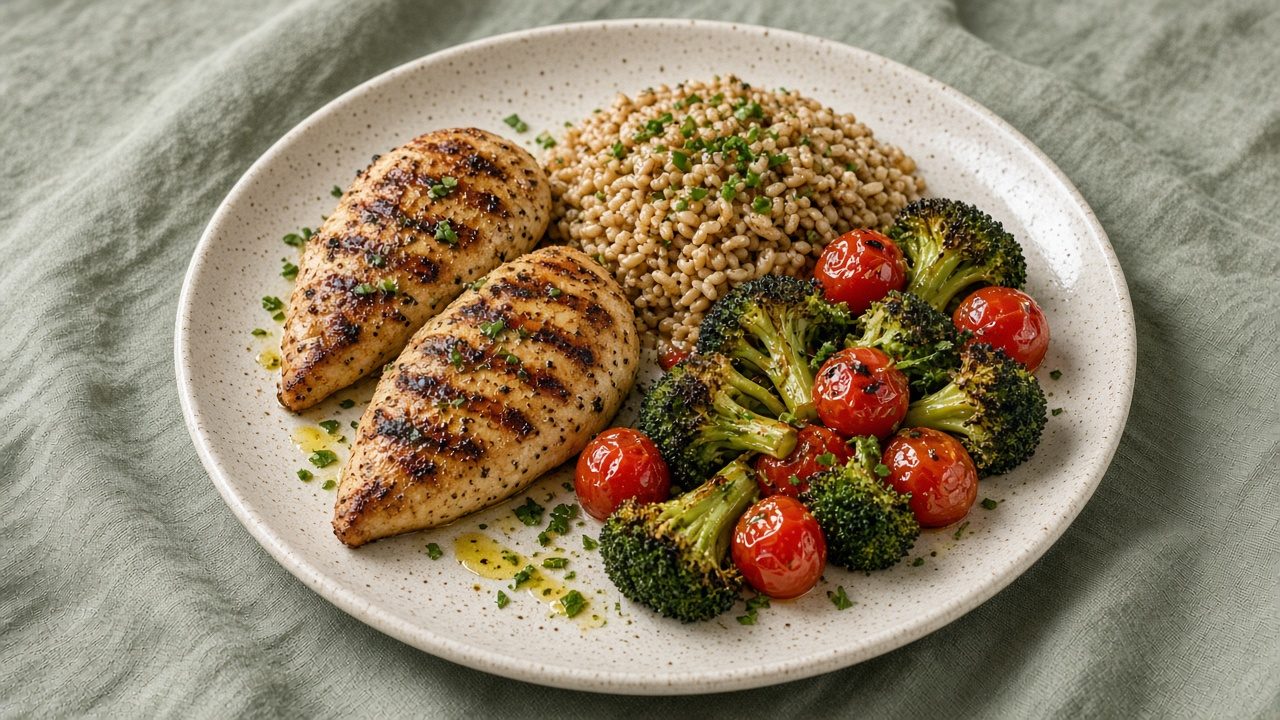
If a PCOS diagnosis came with a lot of advice and not much clarity, or you’ve felt dismissed when you asked about food, that frustration is valid.
Polycystic ovary syndrome comes with a lot of food rules that were not written by anyone who has to eat on a Wednesday. Cut all carbs. Fast until noon. Buy this blend. Shrink yourself and the hormones will behave. Some of that is borrowed from diabetes internet. Some of it is just restriction with a medical word on it.
A Wednesday meal is not a hormone protocol.
This page is an educational companion. It is not a PCOS treatment, a fertility plan, or medical nutrition therapy. We do not diagnose, we do not set carbohydrate grams, and we do not recommend inositol, berberine, spearmint, or any other supplement dose. Diagnosis, cycles, androgens, fertility questions, and medicines belong with the clinician who knows you. A registered dietitian can personalize eating after that. A webpage cannot.
What “supportive” means here
Supportive means the week is easier for energy and hunger to live in—not that a plate reverses a diagnosis. Many people with PCOS also live with insulin resistance. The everyday pattern that tends to feel steadier is the same one we teach elsewhere: meals that happen, protein you can point to, fiber from foods you tolerate, and carbohydrate included on purpose so you are not white-knuckling until the pantry.
That shape is the satisfying plate and the blood sugar steadiness guide. Neither is a PCOS protocol. Both are ordinary food. A bowl with beans or chicken, rice or potatoes, and vegetables is allowed. Fruit is allowed. Bread is allowed. The pattern that usually backfires is skipping those foods all day and then eating them quickly at night because you are exhausted and hungry.
You do not have to earn carbohydrates with a workout. You do not have to be in a calorie deficit for this page to apply. Weight loss is sometimes part of a clinical conversation; it is not a moral assignment, and it is not something we prescribe here. People with PCOS exist at many body sizes. The plate ideas are about regularity and satisfaction, not about making a body smaller on a schedule.
Rhythm beats a clever fast
Long gaps can make hunger feel sharp, especially if lunch was small. A first meal with protein and an afternoon bridge are kinder experiments than a fasting window you found under a PCOS hashtag. Some adults are not hungry early and do fine with a later breakfast. That is a preference. It is not a treatment, and it should not become under-eating. Who a fasting pattern may not suit is spelled out in intermittent fasting—including the line that we do not assign it for PCOS.
Sleep and stress change appetite and glucose for almost everyone, and they are often worse when cycles and symptoms are already loud. The sleep, stress, and appetite guide is the non-heroic version. A short night is not fixed by cutting dinner.
Movement, mentioned lightly
Walking and strength work you can repeat show up in PCOS care because muscle and daily movement affect insulin sensitivity. That is context, not a training plan. We are not assigning sets, steps, or a heart-rate zone. If exercise has been tangled up with punishment, start with a walk you do not have to log. Pain, injury, and what is safe in pregnancy are clinician questions.
Myths that shrink the week
- “All carbs are off the table.” Very-low-carbohydrate eating is a medical-style intervention for some people under care. It is not the default we teach, and doing it alone often tanks fiber, makes social meals impossible, and ends in rebound. Put a carb you like on the plate with protein and plants.
- “Dairy or gluten caused this.” Not as a general rule. If you have a separate diagnosis—celiac disease, an allergy—follow that plan. Dropping food groups to treat PCOS without a clinician mostly makes nutrition thinner.
- “A supplement blend manages the hormones.” Maybe a clinician will discuss a specific product with you. Maybe they will not. Buying a stack because the label says PCOS is not care. See supplement basics for the hype pattern, still without doses.
- “If symptoms continue, the eating was not strict enough.” PCOS is a medical condition. Cycles, skin, hair, and fertility respond to more than willpower. Stricter rules are not the next clinical step. A follow-up is.
What to take to a clinician
Bring irregular cycles, acne or hair growth that is new for you, fertility questions, and any glucose or cholesterol labs you already have. Bring medicines, including anything over the counter. Do not stop a prescribed medicine because a meal felt balanced. Do not start one because a post listed it. If you are pregnant or trying to be, prenatal care outranks every internet plate, including this one. Disordered eating alongside PCOS needs someone who treats both—not a lower-carb challenge.
While you wait for that visit, eat. A weeknight dinner with protein, a starch, and a plant is enough structure. Budget groceries still count. None of this is a promise about cycles or weight.
A short “good enough” check
- Meals showed up, including a first meal, instead of one long fast and a late rescue.
- I could point to protein, and a carbohydrate was included on purpose.
- A plant or other fiber showed up in a form I tolerate.
- I did not start a supplement stack or a ban list from this page.
- Movement, if it happened, was something I can repeat—not a punishment.
- Cycles, medicines, and labs still belong to my clinician, not to a food rule.
If you can tick most of those, the week was supportive in the only way a free guide can be. It did not treat PCOS.
The newsletter is a short note—not a hormone plan. The paid guides are everyday worksheets, not PCOS protocols.
Sources
- ACOG. Polycystic Ovary Syndrome (PCOS). https://www.acog.org/womens-health/faqs/polycystic-ovary-syndrome-pcos
- Eunice Kennedy Shriver National Institute of Child Health and Human Development (NICHD). Polycystic Ovary Syndrome (PCOS). https://www.nichd.nih.gov/health/topics/pcos
- U.S. Department of Agriculture & U.S. Department of Health and Human Services. Dietary Guidelines for Americans, 2025–2030 (January 2026). https://cdn.realfood.gov/DGA.pdf
Still have questions about PCOS? Our RD team would be glad to hear from you: send us a note, or join the newsletter for calm, practical ideas in your inbox.