Life stages
Postpartum eating, without a bounce-back plan
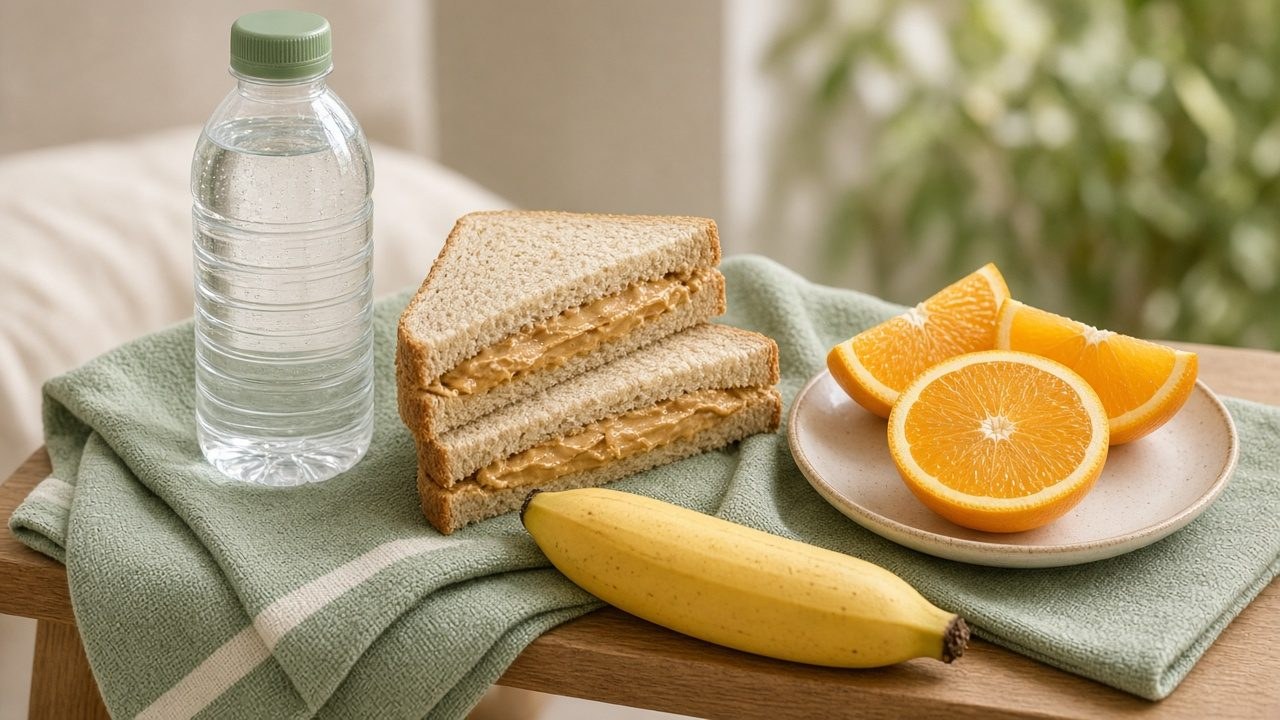
The weeks and months after a baby can leave little room to feed yourself, and if you’re surviving on snacks and cold coffee, please know that’s very common.
The weeks after birth are a recovery, a sleep debt, and a logistics problem that happens to involve food. They are not a project to shrink back into last year’s clothes. Appetite may be huge, absent, or oddly specific. All three can be ordinary. The educational job is to eat often enough that healing has raw materials, and to let other people make that easier.
The weeks after birth are a recovery, not a shrink-back project.
This page is general education from our registered dietitian team. It is not lactation advice, a milk-supply protocol, a calorie target, or medical nutrition therapy. Bleeding, blood pressure, mood, thyroid, anemia, and how you feed the baby are clinical care. Your obstetric clinician, midwife, pediatric clinician, and—if you are breastfeeding—a lactation professional outrank a webpage. Pregnancy defaults live in eating well at every age; this page starts after delivery.
Recovery meals, kept very plain
A supportive plate is the same shape as any other week, lowered to what one hand and a short window can do: a protein you can point to, a carbohydrate, a fruit or vegetable if it is easy, and a drink nearby. Examples that do not require a recipe:
- Yogurt, cheese, or cottage cheese with fruit and a handful of crackers or toast.
- Eggs, a tortilla, and whatever leftover is already in the fridge.
- A sandwich with meat, tofu, or peanut butter, plus a piece of fruit.
- Canned beans or lentil soup, bread, and a frozen vegetable if someone else heats it.
- A bowl someone dropped off, eaten without improving it.
Smaller amounts more often are a reasonable default if a full plate feels impossible, nausea is lingering, or you are feeding a baby in the same hour. Skipping meals to “get your body back” works against recovery. It also makes the next appetite louder and less kind. First-meal protein still applies whenever the first meal happens—even if that is 11 a.m. because the night was broken.
Constipation is common, from hormones, iron tablets, pain, and fear of a bowel movement after tearing. Fluids, a gradual return to foods with fiber, and walking if your clinician has cleared movement are the gentle defaults. Do not start a cleanse. The gut comfort guide is the non-postpartum version of “add fiber slowly.” Call if you are not passing stool, if pain is severe, or if bleeding worries you.
The early weeks are logistics
Put food where you will actually be: a basket by the chair, a water bottle that is already full, a snack you can open one-handed. Ask for groceries and reheated leftovers instead of visitors who hold the baby while you perform hosting. Light meal prep, done by someone who is not you, is a pot of soup and a cooked protein—not a wall of diet containers.
Partners and friends help by stocking the foods that are getting eaten, not by auditing the plate or commenting on your body. “Bounce back” talk can leave the house. So can unsolicited advice about milk, weight, and what a “good” postpartum person eats. If only one food sounds possible this week, that food is allowed to be the plan while you tell your clinician what is happening.
Caffeine and alcohol questions come up constantly. Coffee can be part of a day that also includes food and sleep attempts; it is not a substitute for either. Alcohol is not required for a social life and not a health step. If you are breastfeeding or chestfeeding, timing and amount are a conversation with your clinician or a lactation professional. This page will not assign a clock, a “pump and dump” rule, or a safe number. Everyday framing for adults who are not in this season is in alcohol, caffeine, and “is this fine?”
Feeding a baby, and not feeding a baby
If you are lactating, energy and fluid needs are often higher than before pregnancy. That is a reason to eat regular meals and keep a drink nearby. It is not a reason to under-eat, and it is not a reason to buy a supplement stack or a cookie marketed as a supply treatment. Many traditional “supply foods”—oats, soups, grains—are perfectly fine foods. They are not medicine, and they are not a promise. Milk supply concerns, pain with feeding, and infant weight belong with a lactation professional and the baby’s clinician.
If you are not breastfeeding, recovery still needs food. Formula feeding is a complete way to feed a baby. It does not put you on a deficit. Shrinking intake in the first weeks to force a weight change is the reboot this practice does not teach.
Infant symptoms—rashes, blood in stool, poor gain—are the baby’s medical care. Do not start an elimination diet on yourself to test a theory about colic or “inflammation.” Removing dairy, soy, or larger sets of foods can affect your intake and, if done casually, can miss the actual problem. Bring the pattern to the pediatric clinician before you redesign your plate.
Iron, mood, and the clinician line
Blood loss, fatigue, and prenatal iron history make iron a common topic. Iron-rich foods—meat, beans, lentils, fortified cereal, leafy greens, with a vitamin C food if that is easy—can be part of ordinary meals. Whether you need a supplement, and how much, is a lab and clinician question. Do not stack extra iron because a bottle is in the cabinet.
Mood and food tangle. Short sleep makes hunger louder or flattens appetite entirely; sleep, stress, and appetite describes that without expecting you to fix your sleep while a newborn is in the house. Postpartum anxiety and depression are medical conditions, not a meal-plan failure. If eating feels impossible, if you cannot sleep even when the baby sleeps, or if worry is taking over, tell your clinician. If you have thoughts of harming yourself or the baby, contact emergency services or call or text 988 in the U.S. You do not have to tidy that into a nutrition question first.
Also call promptly for heavy bleeding, fever, a severe headache, vision changes, chest pain or trouble breathing, calf pain and swelling, fainting, or vomiting that keeps you from keeping fluids down. Those are not cues to adjust a snack.
A history of gestational diabetes, preeclampsia, thyroid disease, anemia, or an eating disorder belongs in follow-up care, not in a home reboot. Weight comments from apps and relatives are not that follow-up. The scale is not the fourth-trimester assignment.
A short “good enough” check
- I ate more than once, with a protein I could point to, even if the meals were small or repetitive.
- A drink was nearby. I did not turn fluids into a gallon challenge.
- Someone else was allowed to handle food, and my body was not a topic.
- I did not start a deficit, a cleanse, or an elimination diet to force a result.
- Breastfeeding questions went to a lactation professional or clinician—not to a supply protocol on this page.
- Bleeding, mood, fainting, or thoughts of harm would send me to real medical care.
If you can tick most of those, eating was supportive. It will not guarantee healing, milk supply, or a weight outcome. It will keep recovery from being rewritten as a diet.
Related pieces: eating well at every age, light meal prep, and sleep, stress, and appetite. The newsletter is a short note—not a reboot.
Sources
- 988 Suicide & Crisis Lifeline. https://988lifeline.org/
- ACOG. Breastfeeding Your Baby. https://www.acog.org/womens-health/faqs/breastfeeding-your-baby
- CDC. About Folic Acid. https://www.cdc.gov/folic-acid/about/index.html
- U.S. Department of Agriculture & U.S. Department of Health and Human Services. Dietary Guidelines for Americans, 2025–2030 (January 2026). https://cdn.realfood.gov/DGA.pdf
Still have questions about postpartum eating? Our RD team would be glad to hear from you: send us a note, or join the newsletter for calm, practical ideas in your inbox.