Family
School lunch packs that hold up until lunch
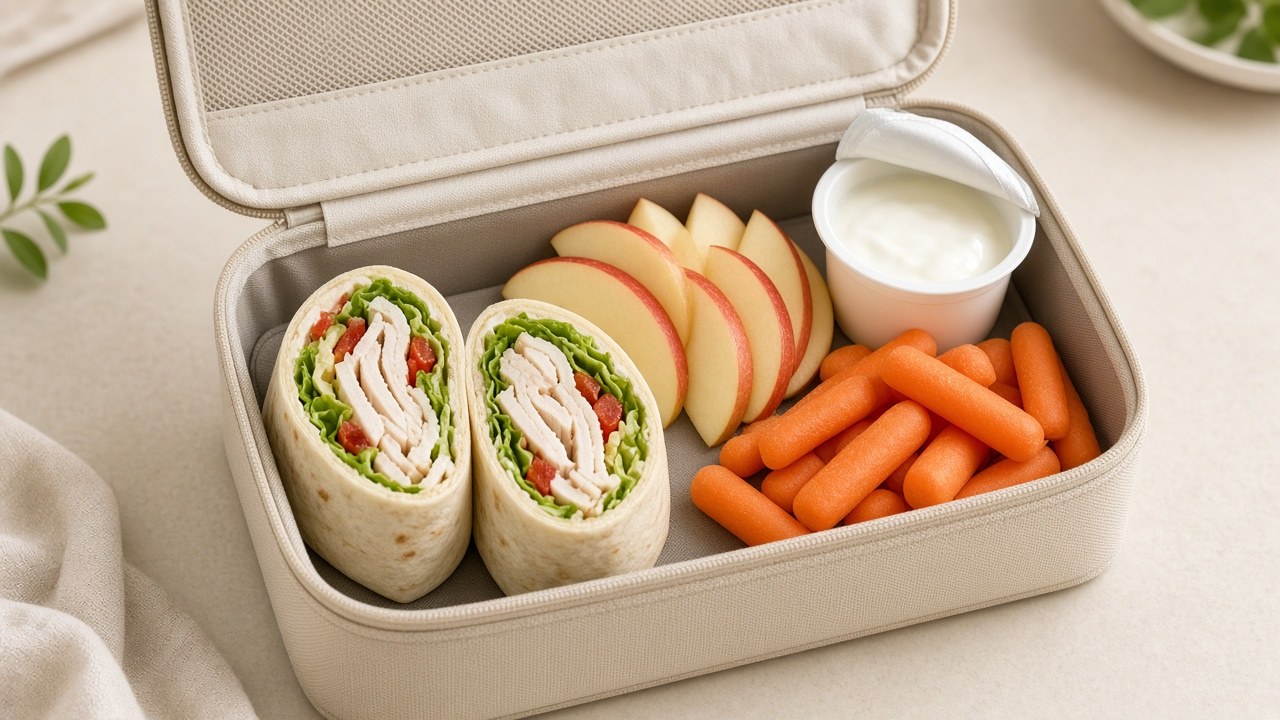
Packing school lunches can feel like a daily puzzle, especially when half of it comes home uneaten.
A school lunch has one job: still be edible, and mostly welcome, several hours after it left your kitchen. It does not have to be a bento advertisement. It does not have to prove that your family cooks from scratch. Hungry kids in the middle of a loud day need food they recognize more than they need a theme.
The lunch they eat beats the lunch that photographs well.
This is family education from our registered dietitian team, not a growth assessment, a school allergy plan, or medical nutrition therapy. If a clinician or the school has already set limits—allergies, texture needs, diabetes care—those outrank a general article. Questions about weight, growth, or a child who is hardly eating belong with a pediatric clinician or a dietitian who works with kids.
Four pieces, not a performance
A steady packed lunch usually has four things. Miss one sometimes. Do not miss the one they will actually eat.
- Protein they can point to: turkey or tofu in a sandwich, cheese, yogurt, hummus, beans, a leftover meatball, edamame, a cheese stick.
- A carbohydrate that feels like lunch: bread, a tortilla, crackers, rice, pasta, fruit, a granola bar. This is fuel for recess and the afternoon, not a food to minimize.
- A plant, in a form they tolerate: fruit, cucumber, cherry tomatoes, a few carrot sticks, applesauce, leftover roasted vegetables if that is honestly something they eat.
- Something you know they eat. Call it a safe food if you want. A familiar cracker next to a new fruit is not “giving in.” It is how many kids stay willing to open the box. Pressure is covered, gently, in picky eating, without food fights.
You do not need all four to be homemade. A yogurt cup, a cheese stick, store bread, and an apple is a complete idea. Sports and active kids uses the same shape on practice days: do not send them to a long afternoon on a garnish.
Hot, cold, and the hours in between
Food safety here is ordinary, not a second career.
- Cold foods (yogurt, cheese, deli meat, leftovers with meat or dairy) do better with an ice pack in an insulated bag. A hot car trunk is not a refrigerator. If the lunch will sit in a warm room for many hours, choose more shelf-stable pieces that day and keep the dairy for a fridge at home.
- Hot foods belong in a thermos you have already warmed with hot water, then filled with truly hot leftovers—soup, pasta, rice and beans. A lukewarm thermos becomes a sad surprise by noon.
- Texture after four hours: juicy fruit in a sealed cup, crackers separate from tuna so nothing goes soggy, lettuce kept out of the sandwich if they hate wilt. Cutlery if the food needs it. A lunch they cannot open is a lunch they skip.
- Discard perishable food that comes home warm and has sat out. That is safety, not waste-guilt. Tomorrow’s box can be simpler.
Packaged sides are allowed
Applesauce pouches, yogurt tubes, crackers, string cheese, shelf-stable milk, a granola bar, dried fruit, and a bag of pretzels are not a character flaw. They are how a lot of decent lunches survive a Tuesday. The ultra-processed food guide is the longer version: packages can help, and the week is not a purity test.
If you want a nudge, pair the packaged side with a protein and a piece of fruit rather than replacing the whole lunch with sweets. A cookie in the box can still be part of lunch. Announcing it as a prize for eating the carrots teaches the wrong lesson. Dessert can just be there.
- Rotate two or three lunches they already accept instead of inventing a new menu every Sunday.
- Leftovers from weeknight dinners count. Pasta, rice bowls, and quesadillas are lunch foods.
- Let them assemble once in a while—crackers, cheese, fruit—if that makes the box more likely to come home empty. Helping is optional, not a chore chart about nutrition.
When the box comes home full
An uneaten lunch is information, not a report card. They may be distracted, trading, not hungry yet, or unable to open a container. Ask what happened before you redesign the week. Offer the food after school if it is still safe and they want it. Do not require a clean box to “earn” a snack. Short school days and long ones are different appetites.
School meals from the cafeteria are also a valid lunch. Packing is not morally superior. If the cafeteria is what they will eat, and it fits any allergy rules the school has, you can stop fighting the thermos.
Allergy and intolerance rules at school are the school’s plan plus your clinician’s, not this article. If a food is banned in the classroom, leave it out without turning the packed lunch into a lecture. The language for that lives in food allergies and intolerances—education only, not a diagnosis.
A short “good enough” check
- There is a protein and a carbohydrate they have eaten before.
- A plant is included in a form that has a real chance, not only as a test.
- Cold food has an ice pack, or the box is built from foods that can sit safely.
- A packaged side is allowed to be in there without a speech.
- I am not using the lunch box to manage a child’s weight or to win a comparison.
- Allergies and the school’s rules still outrank my creativity.
If you can tick most of those, lunch was packed. Some days they will eat it. Some days they will not. The pattern is the offer, repeated, without shame.
Shopping for it can stay boring on purpose: grocery defaults. The newsletter is a short note, not a meal plan.
Sources
- American Academy of Pediatrics (HealthyChildren.org). Making Healthy Food Choices. https://www.healthychildren.org/English/ages-stages/gradeschool/nutrition/Pages/Making-Healthy-Food-Choices.aspx
- FDA. Food Allergies. https://www.fda.gov/food/nutrition-food-labeling-and-critical-foods/food-allergies
- USDA FSIS. Keeping “Bag” Lunches Safe. https://www.fsis.usda.gov/food-safety/safe-food-handling-and-preparation/food-safety-basics/keeping-bag-lunches-safe
Wherever you are with school lunches, small steps count. If you’d like a hand, tell our RD team what’s going on, or join the newsletter to keep learning with us.