Eating patterns
The 2025–2030 Dietary Guidelines in plain English: what they say and what to do with them
Last reviewed: October 2026 by our RD team
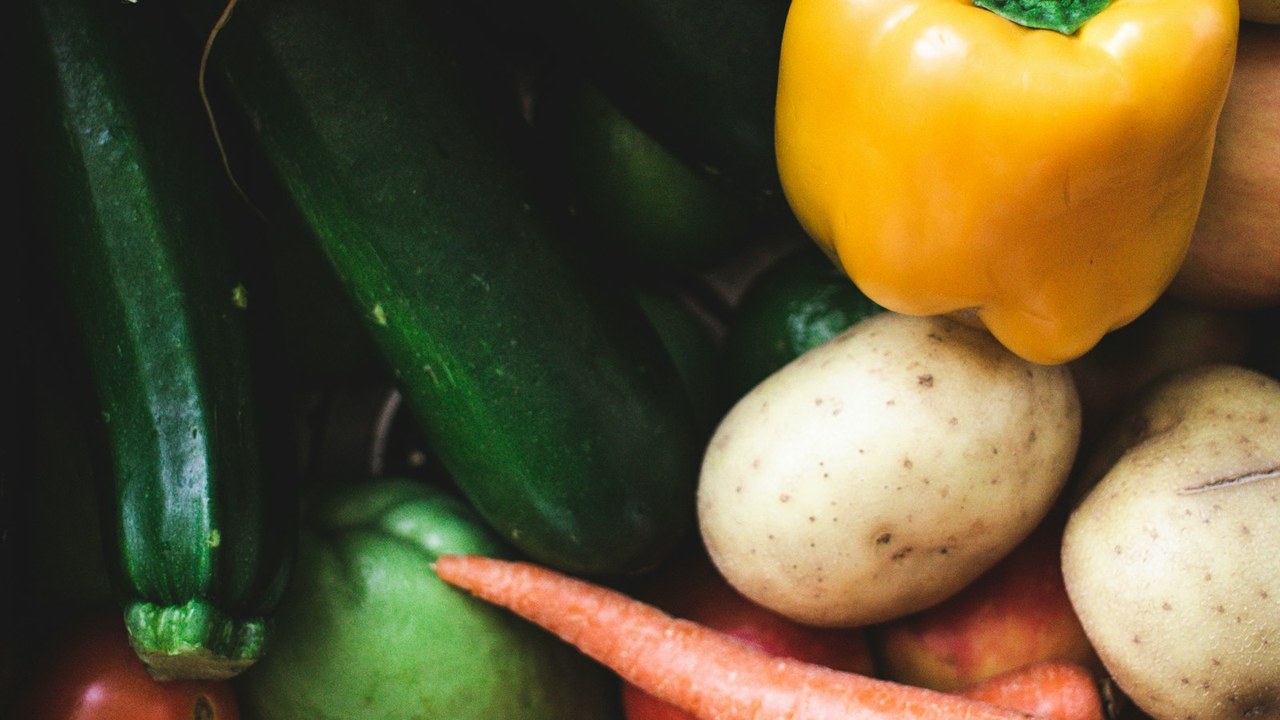
If you have heard that “the guidelines changed” and your doctor, a favorite app, and the internet all seem to say something different, this page is the calm version: what the new document says, what it does not say, and what most people can safely do this week.
The Dietary Guidelines for Americans are the federal government’s main nutrition advice for people ages 2 and older. They are rewritten every five years by the U.S. Department of Agriculture (USDA) and the U.S. Department of Health and Human Services. The 2025–2030 edition was published in January 2026, and it is much shorter than the last one: the core advice fits on about nine pages. This page compares it with the 2020–2025 edition and with what the American Heart Association (AHA), the National Heart, Lung, and Blood Institute (NHLBI), and the Academy of Nutrition and Dietetics currently publish.
This guide is educational. It describes what these organizations publish; it is not a personal recommendation, and it does not replace advice from your own clinician or registered dietitian.
Most of the practical overlap is simple: cook more, buy fewer ultra-processed foods, and build meals around foods that look like the plant or animal they came from.
The big picture in one paragraph
The 2025–2030 Guidelines frame their message as “eat real food.” They call for diets built on whole, nutrient-dense foods (protein foods, dairy, vegetables, fruits, healthy fats, and whole grains) and “a dramatic reduction in highly processed foods laden with refined carbohydrates, added sugars, excess sodium, unhealthy fats, and chemical additives.” The document is organized by topic: eat the right amount for you; prioritize protein at every meal; consume dairy; eat vegetables and fruits throughout the day; incorporate healthy fats; focus on whole grains; and limit highly processed foods, added sugars, and refined carbohydrates. It also covers sodium, alcohol, and special populations.
The numbers in one table
These are the quantities the Guidelines state directly. Servings goals are written for a 2,000-calorie pattern and are meant to be adjusted to your own calorie needs. The Guidelines’ companion Daily Servings Guide (linked from realfood.gov) defines what counts as a serving; we have not reproduced it here, so check it if you want exact portion sizes.
| Food or nutrient | What the Guidelines say |
|---|---|
| Protein | Goal of 1.2–1.6 grams per kilogram of body weight per day, adjusted for your calorie needs; a variety of animal and plant protein foods |
| Dairy | 3 servings per day in a 2,000-calorie pattern; when you choose dairy, full-fat with no added sugars |
| Vegetables | 3 servings per day |
| Fruits | 2 servings per day; whole fruit rather than juice, and 100% juice in limited portions or diluted with water |
| Whole grains | 2–4 servings per day; significantly reduce highly processed, refined carbohydrates |
| Saturated fat | In general, no more than 10% of total daily calories |
| Sodium | Less than 2,300 mg per day for ages 14 and older; lower limits for younger children |
| Added sugars | No amount is recommended as part of a healthy diet; one meal should contain no more than 10 grams |
| Alcohol | “Consume less alcohol for better overall health”; some people should avoid it entirely (for example, during pregnancy) |
Source: Dietary Guidelines for Americans, 2025–2030 (January 2026), pages 1–5.
What stayed the same and what changed
Comparing the new edition with the 2020–2025 edition (December 2020) is the quickest way to cut through the headlines.
| Topic | 2020–2025 | 2025–2030 |
|---|---|---|
| Overall message | Follow a healthy dietary pattern at every life stage | “Eat real food”; limit highly processed foods |
| Protein | Variety of protein foods (no gram-per-kilogram goal) | 1.2–1.6 g/kg/day goal; protein at every meal |
| Dairy | Fat-free or low-fat milk, yogurt, and cheese | Full-fat dairy with no added sugars; 3 servings a day |
| Grains | At least half of grains should be whole grain | Whole grains 2–4 servings a day; “significantly reduce” refined carbohydrates such as white bread, packaged breakfast items, flour tortillas, and crackers |
| Added sugars | Less than 10% of calories per day (ages 2 and older) | No amount recommended; no more than 10 g in one meal |
| Saturated fat | Less than 10% of calories | No more than 10% of calories (same ceiling) |
| Sodium | Less than 2,300 mg per day | Less than 2,300 mg per day (same ceiling) |
Sources: Dietary Guidelines for Americans, 2020–2025 (December 2020) and 2025–2030 (January 2026).
Notice how much is continuity: vegetables, fruit, whole grains, the 2,300 mg sodium ceiling, and the 10% saturated fat ceiling all carry over. The changes are in emphasis (protein and dairy up front, processing level named directly) and in specifics (full-fat dairy, a protein gram goal, and the stricter sugar language).
“Highly processed” and what it means in practice
The Guidelines advise avoiding “highly processed packaged, prepared, ready-to-eat, or other foods that are salty or sweet, such as chips, cookies, and candy that have added sugars and sodium.” They also say to limit foods with artificial flavors, petroleum-based dyes, artificial preservatives, and low-calorie non-nutritive sweeteners. The text does not give a single legal definition of “highly processed.” The ingredient list is the practical tool: if it reads like a recipe you could make, it is probably less processed; a long list of additives, sweeteners, and refined starches points the other way. Our ultra-processed food guide walks through the evidence and the label clues without the panic, and reading food labels covers the Nutrition Facts panel.
Frozen, dried, or canned vegetables and fruit with no or very limited added sugars are explicitly listed as good options, so “fresh only” is not the message. Neither is “nothing from a package.”
Where the AHA, NHLBI, and the Academy still say something different
The Guidelines are one source among several. Respected health organizations still publish advice that differs from the 2025–2030 edition on a few points. We present both without picking a winner, because the right answer for you depends on your health, your medications, and your clinician’s targets.
| Topic | 2025–2030 Dietary Guidelines | Other organizations |
|---|---|---|
| Dairy fat | Include full-fat dairy with no added sugars | NHLBI’s DASH plan recommends fat-free or low-fat dairy and says to limit full-fat dairy products. The AHA’s protein page says to opt for low-fat or fat-free dairy instead of full-fat. The Academy lists low-fat or fat-free dairy as a healthy protein choice and whole-fat dairy among foods to limit for saturated fat |
| Sodium | Less than 2,300 mg per day | AHA: no more than 2,300 mg a day, with an optimal goal of no more than 1,500 mg for most adults. NHLBI: 2,300 mg, noting 1,500 mg lowers blood pressure even further |
| Added sugars | No amount recommended; ≤10 g per meal | AHA and the FDA use percentages or Daily Values rather than a zero target (see our added sugars guide) |
| Whole-grain tortillas and crackers | Flour tortillas and crackers are named as refined carbohydrates to reduce | The Academy’s fiber tips suggest whole-grain tortillas, whole-grain bread, and whole-grain crackers as fiber sources. Choosing the whole-grain version is a way to reconcile both |
Sources: DGA 2025–2030; NHLBI DASH eating plan (updated Feb. 25, 2026); AHA, “How Much Sodium Should I Eat Per Day?” (reviewed July 15, 2025) and “Protein: What’s Enough?” (reviewed Aug. 28, 2024); Academy, “How Much Protein Should I Eat?” (reviewed Feb. 3, 2026) and “Easy Ways to Boost Fiber in Your Daily Diet.”
On saturated fat, the Guidelines and DASH both keep the same ceiling of 10% of calories or less, but they steer toward it differently: the Guidelines list full-fat dairy, meat, eggs, and cooking fats such as butter or beef tallow among “healthy fats” (with olive oil first), and also note that more high-quality research is needed on which fats best support long-term health. DASH, the AHA, and the Academy lean toward lower-fat dairy and leaner protein foods. Neither approach says unlimited.
How to hold both: a short overlap list
Despite the headlines, most advice overlaps more than it conflicts. These habits fit the 2025–2030 Guidelines and the AHA, NHLBI, and Academy:
- Cook more of your own meals. The Guidelines say to prioritize home-prepared meals; the AHA and NHLBI also point to packaged and restaurant food as the main sodium source.
- Make vegetables and fruit the default, in any form, with no or limited added sugar or salt.
- Choose whole grains most of the time, and look for fiber on the label (see our fiber guide).
- Put a protein food at each meal (eggs, fish, poultry, meat, beans, lentils, tofu, dairy, nuts). Our protein guide turns the gram goals into portions.
- Drink mostly water or other unsweetened drinks, and cut back sweetened beverages first.
- Read the sodium and added sugars lines on packaged foods you eat often.
- Use olive oil, nuts, seeds, avocado, and fish regularly; treat butter, beef tallow, and fatty or processed meats as occasional rather than daily defaults if your clinician has advised watching saturated fat.
When your own clinician’s numbers come first
The Guidelines themselves say that if you have a chronic disease you should talk with your health care professional about whether to adapt them. That especially applies if you have heart disease, high cholesterol, high blood pressure, diabetes, kidney disease, or are pregnant, breastfeeding, or taking medications that interact with food. Targets your care team gave you (for example, a sodium limit of 1,500 mg, a low-saturated-fat plan, or a protein limit for kidney disease) override a general population guideline. Our guides on blood pressure and DASH, heart-friendly plates, and cholesterol and food myths cover the heart-health side.
A sample “overlap day”
Nothing here is a prescription; it is one way to see the shared advice on a plate. Amounts depend on your appetite and calorie needs.
| Meal | Plate idea | Swap if you prefer |
|---|---|---|
| Breakfast | Scrambled eggs with spinach, whole-grain toast, and an orange | Plain yogurt (any fat level your clinician suggests) with oats, berries, and nuts |
| Lunch | Lentil or bean soup, a side salad with olive oil and lemon, and a whole-grain wrap | Leftover roasted chicken or tofu over greens with chickpeas and whole-grain crackers |
| Snack | Apple with peanut butter | Carrots and hummus; a small handful of unsalted nuts |
| Dinner | Baked salmon, roasted broccoli and sweet potato, brown rice | Stir-fried vegetables with tempeh or chicken and brown rice; or black bean tacos on whole-grain tortillas with cabbage slaw |
| Drinks | Water, sparkling water, unsweetened tea or coffee | Add citrus or mint instead of sweetener |
Illustrative only. Food choices should fit your culture, budget, allergies, and medical advice.
Frequently asked questions
Is full-fat dairy okay now?
The 2025–2030 Guidelines recommend choosing full-fat dairy with no added sugars and set a goal of 3 servings a day in a 2,000-calorie pattern. NHLBI’s DASH plan, which is used for blood pressure, and the AHA still recommend fat-free or low-fat dairy. Both keep saturated fat at 10% of calories or less as an overall ceiling. If you have high LDL cholesterol or heart disease, ask your clinician which version fits your plan. Many people do well with either, in sensible portions.
Do I need more protein?
The Guidelines set a serving goal of 1.2–1.6 grams of protein per kilogram of body weight a day, higher than the long-standing Recommended Dietary Allowance (RDA) of 0.8 g/kg that the AHA and the Academy cite for most healthy adults. The Academy also notes that most Americans already get enough protein overall but lack variety. See how much protein you actually need for worked examples, and check with your clinician first if you have kidney disease.
Should I stop eating saturated fat?
No guideline says to eliminate it. The 2025–2030 Guidelines keep the same ceiling as before (no more than 10% of calories) and advise that significantly limiting highly processed foods will help meet it. For a 2,000-calorie day, 10% is about 200 calories, or roughly 22 grams of saturated fat. If you have high cholesterol or heart disease, your clinician may recommend a lower amount.
Which guideline should I follow: the federal one, the AHA, or my doctor’s?
If your doctor or dietitian gave you a specific target, follow that one. For everyone else, the overlap list above is a reasonable place to start. When sources differ (dairy fat, sodium, sugar), the more conservative number is a sensible choice if you have a heart or blood pressure condition, and the Guidelines’ number is the general-population standard.
Are ultra-processed foods banned?
No. The Guidelines advise avoiding highly processed foods and “significantly” limiting them, but they are advice, not rules. They also note that this is not a legal definition of “highly processed.” Aim for a gradual shift, such as swapping one packaged item a week for a homemade or less-processed version.
Do the Guidelines apply to children, pregnancy, or older adults?
The Guidelines include sections for infants and young children, school-age children, adolescents, pregnancy, lactation, older adults, vegetarians and vegans, and people with chronic disease. Needs differ in each stage, so use those sections or ask a pediatrician, obstetric clinician, or registered dietitian. Our life stages guide and muscle and aging guide are good starting points.
Where can I read the Guidelines myself?
The full document is at cdn.realfood.gov/DGA.pdf, with companion materials on realfood.gov. The page says some content was still undergoing an accessibility review when we last checked (October 2026).
A short “good enough” check
- Most of my meals today included a protein food and a vegetable or fruit.
- I chose a whole-grain option at least once.
- I read the sodium or added sugar line on one packaged food.
- I know whose targets I follow if mine differ from the general advice: my clinician’s.
Related reads: how much protein you need, added sugars and sweeteners, ultra-processed food, and reading food labels.
Sources
- U.S. Department of Agriculture & U.S. Department of Health and Human Services. Dietary Guidelines for Americans, 2025–2030 (January 2026). https://cdn.realfood.gov/DGA.pdf
- USDA & HHS. Dietary Guidelines for Americans, 2020–2025, 9th Edition (December 2020). https://www.dietaryguidelines.gov/sites/default/files/2020-12/Dietary_Guidelines_for_Americans_2020-2025.pdf
- Real Food (realfood.gov). Eat Real Food: Dietary Guidelines overview. https://realfood.gov
- NHLBI. DASH Eating Plan (updated February 25, 2026). https://www.nhlbi.nih.gov/health/dash-eating-plan
- American Heart Association. How Much Sodium Should I Eat Per Day? (last reviewed July 15, 2025). https://www.heart.org/en/healthy-living/healthy-eating/eat-smart/sodium/how-much-sodium-should-i-eat-per-day
- Academy of Nutrition and Dietetics (eatright.org). Easy Ways to Boost Fiber in Your Daily Diet. https://www.eatright.org/health/essential-nutrients/carbohydrates/easy-ways-to-boost-fiber-in-your-daily-diet
- Academy of Nutrition and Dietetics (eatright.org). How Much Protein Should I Eat? (reviewed February 3, 2026). https://www.eatright.org/health/essential-nutrients/protein/how-much-protein-should-i-eat
- American Heart Association. Protein: What’s Enough? (last reviewed August 28, 2024). https://www.heart.org/en/healthy-living/healthy-eating/eat-smart/nutrition-basics/protein-and-heart-health
Still wondering what the new guidelines mean for you? Our RD team would be glad to hear from you: send us a note, or join the newsletter for calm, practical ideas in your inbox.